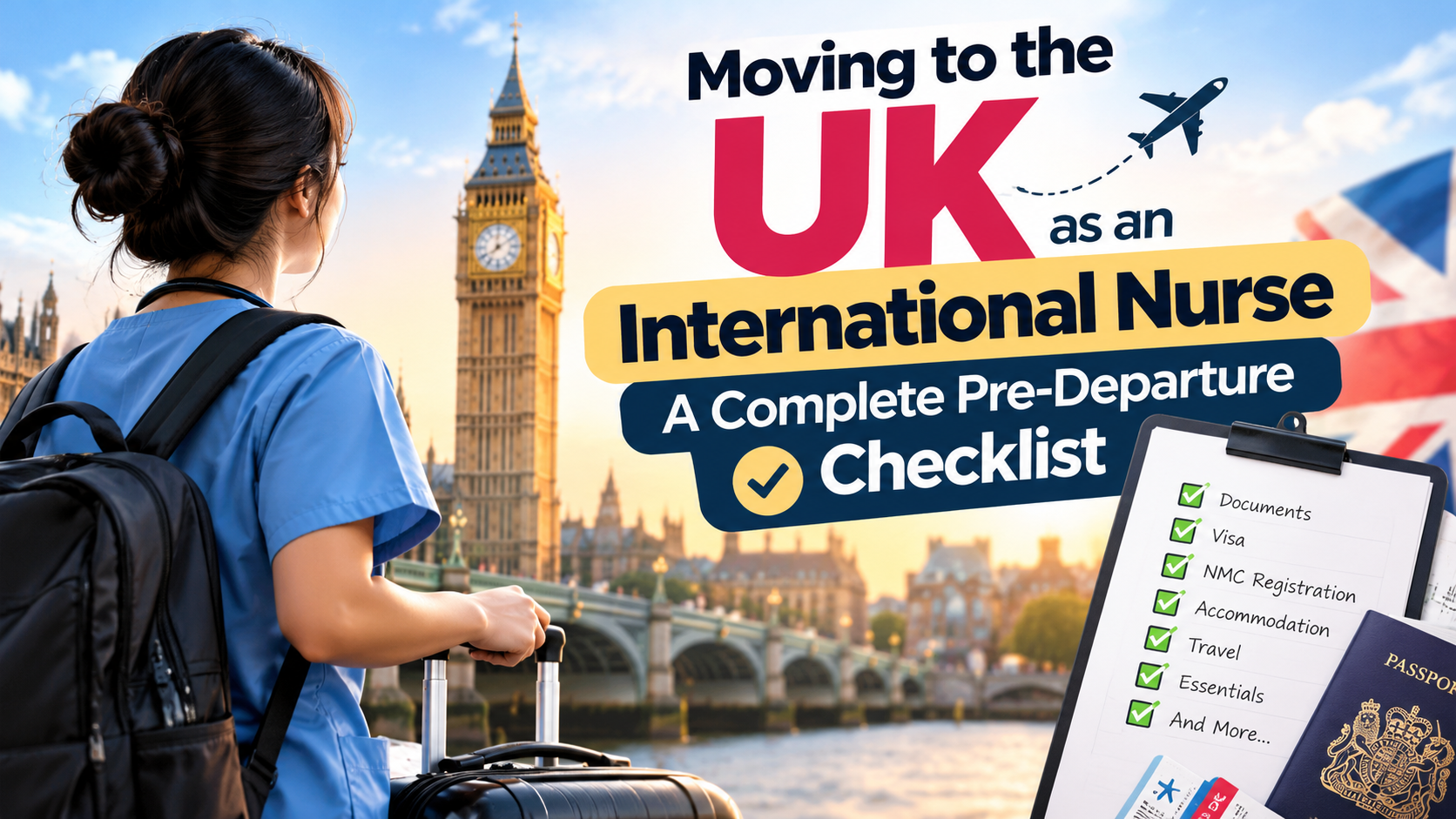
Moving to the UK as an International Nurse: A Complete Pre-Departure Checklist
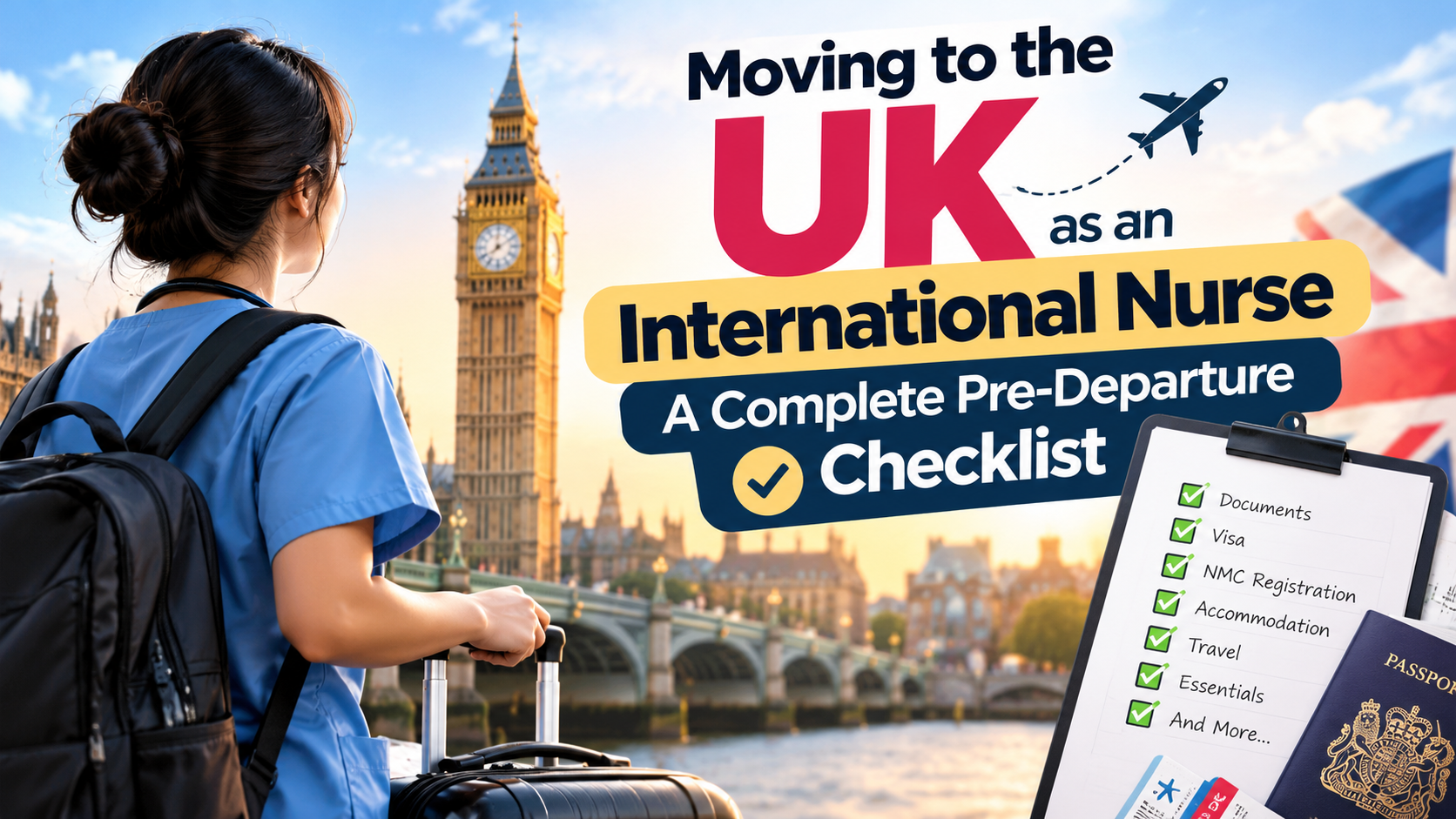

Moving to the United Kingdom as an international nurse is an exciting opportunity to advance your nursing career, gain international experience, and build a new life in a country with a diverse healthcare system. However, relocating overseas involves much more than booking a flight. From completing professional registration and securing the correct visa to arranging accommodation and preparing for life in a new country, every step requires careful planning.
For internationally educated nurses, preparing before departure can make the transition smoother, reduce last-minute stress, and help you feel more confident when starting your new role.
Whether you are a nurse from India, the Philippines, Nigeria, or another country planning to work in the UK, this complete pre-departure checklist will help you organise your documents, understand important requirements, and prepare for your journey.
1. Confirm Your UK Nursing Registration Requirements
Before travelling to the UK to practise as a nurse, you should understand the requirements of the Nursing and Midwifery Council (NMC), the professional regulator for nurses and midwives in the UK.
Internationally educated nurses generally need to follow the appropriate NMC registration process before they can practise as registered nurses. The process depends on your qualifications, professional experience, and individual circumstances.
Your NMC pre-departure checklist
● Review the NMC registration requirements for internationally educated nurses.
● Check your eligibility and the registration route applicable to your qualification.
● Prepare your nursing degree or diploma certificates.
● Gather evidence of your nursing registration and professional qualifications.
● Arrange employment references or other supporting evidence where required.
● Complete the relevant English language requirements.
● Prepare for any required Test of Competence assessments.
● Check the status of your registration application and any outstanding steps.
The NMC may require evidence of your identity, qualifications, professional registration, health, character, and English language ability. Requirements vary by applicant, so review the official guidance before making travel arrangements.
Read the official guidance: https://www.nmc.org.uk/registration/joining-the-register/register-nurse-midwife/trained-outside-uk/
Important: Passing an English language test or receiving a job offer does not automatically mean you are fully registered with the NMC. Check your individual registration status and your employer's requirements before starting clinical practice.
2. Prepare Your English Language Documents
Effective communication is essential for patient safety, clinical handovers, documentation, and teamwork in the UK healthcare environment.
The NMC accepts specific forms of evidence to demonstrate English language proficiency. Depending on your circumstances, these may include an accepted English language test, a qualifying nursing programme taught and examined in English, or recent professional practice in a country where English is the majority-spoken language.
English language preparation checklist
● Check the latest NMC English language requirements.
● Keep your IELTS Academic or OET results available if applicable.
● Confirm that your results meet the required scores and validity conditions.
● Organise supporting documents if you are using another accepted route.
● Practise clinical communication, including patient assessments and handovers.
● Familiarise yourself with common UK healthcare terminology.
Nursing English involves more than everyday conversation. You should feel comfortable explaining procedures, confirming medication instructions, documenting observations, and raising concerns with colleagues.
Official resource: https://www.nmc.org.uk/registration/joining-the-register/english-language-requirements/
3. Check Your UK Work Visa and Immigration Documents
Having the correct immigration permission is one of the most important parts of preparing to move to the UK.
Many eligible overseas nurses apply through the Health and Care Worker visa route. Eligibility depends on the role, employer, sponsorship arrangements, salary requirements, and applicable immigration rules.
Before departure, confirm your visa arrangements directly with your employer and the relevant UK government guidance.
Visa and immigration checklist
● Check that your passport is valid for your planned travel.
● Confirm that your UK job offer and employment details are correct.
● Obtain the Certificate of Sponsorship reference number from your employer, if required.
● Check the employer's sponsorship status and your job's eligibility.
● Submit the appropriate visa application.
● Complete any required identity verification or biometric appointment.
● Arrange any required tuberculosis test or criminal record certificate.
● Prepare supporting documents for accompanying family members, if applicable.
● Check your visa decision and any conditions attached to your permission.
● Confirm your permitted travel dates and entry requirements.
The documents required can vary depending on your circumstances. For example, applicants may need proof of English language ability, evidence of their identity, employment details, or additional supporting documents.
Official resources:
● Health and Care Worker visa: https://www.gov.uk/health-care-worker-visa
● Visa document checklist: https://www.gov.uk/health-care-worker-visa/documents-you-must-provide
Never assume that a job offer alone gives you permission to enter the UK or begin employment. Confirm that your immigration arrangements are complete before travelling.
4. Organise All Essential Documents
Keeping your documents organised will make your journey, arrival, and initial employment checks much easier.
Prepare a dedicated folder containing original documents, copies, and secure digital backups. Keep essential travel and immigration documents in your hand luggage rather than your checked baggage.
Documents to prepare before departure
Personal identification
● Valid passport.
● Visa or evidence of immigration permission, as applicable.
● Passport-sized photographs, if required.
● Birth certificate, where relevant.
Professional documents
● Nursing degree or diploma certificates.
● Academic transcripts.
● Nursing registration certificates.
● Employment experience letters.
● Professional references.
● NMC correspondence and registration evidence.
● English language test results, where applicable.
● Training and professional development certificates.
Employment documents
● Signed employment contract.
● Job offer letter.
● Certificate of Sponsorship details, if applicable.
● Employer contact information.
● Joining instructions.
● Occupational health or pre-employment documentation requested by your employer.
Additional documents
● Marriage certificate or children's birth certificates, where relevant.
● Certified translations for documents not accepted in their original language.
● Prescriptions and relevant medical records.
● Accommodation confirmation and travel itinerary.
Check that names, dates of birth, and other personal details are consistent across your documents. If there are discrepancies, ask the relevant authority or employer how to resolve them before travelling.
5. Confirm Your Employment Details
Before leaving your home country, make sure you understand the terms of your UK nursing job.
An employment contract is an important reference for your salary, responsibilities, working hours, and other employment conditions.
Questions to ask your employer
● What is my official job title and nursing department?
● Where will I be based?
● What is my expected joining date?
● What is my salary and pay frequency?
● What shift patterns should I expect?
● Will I receive an induction or preceptorship programme?
● Is accommodation available, or will I need to arrange it independently?
● Is airport pickup or relocation assistance provided?
● Which original documents must I bring for employment checks?
● Who should I contact if my travel plans change?
Ask for written confirmation of any relocation assistance, training arrangements, accommodation support, or other benefits.
If you are joining an NHS organisation, familiarise yourself with the relevant policies, professional expectations, and induction arrangements. If you are joining another healthcare provider, confirm its own procedures and employment requirements.
6. Plan Your Accommodation Before Arrival
Finding suitable accommodation is an important step when moving to the UK as an international nurse.
Your ideal location will depend on your workplace, transport options, budget, and personal preferences. Living close to your hospital or healthcare facility may be especially useful if you will work early, late, or night shifts.
Accommodation checklist
● Confirm whether your employer provides temporary or permanent accommodation.
● Research rental properties near your workplace.
● Compare rent, transport costs, and local amenities.
● Check whether utility bills are included in the rent.
● Understand deposit and tenancy requirements.
● Confirm your move-in date and access arrangements.
● Check the availability of supermarkets, pharmacies, and public transport.
● Arrange temporary accommodation if your long-term housing is not ready.
If you are renting privately, read the agreement carefully before paying a deposit. Verify the property and landlord, understand the payment terms, and avoid sending money to unverified individuals.
Consider booking temporary accommodation for your first few days if you need time to inspect properties in person.
7. Create a Realistic Moving Budget
Relocating to the UK involves several expenses, and planning your budget in advance can help you manage the first few weeks more comfortably.
Your costs will depend on your destination, accommodation arrangements, family circumstances, and the support provided by your employer.
Expenses to include in your budget
Expense category What to consider
Travel Flight tickets, airport transfers, and baggage
Immigration Applicable visa and document-related costs
Accommodation Rent, deposit, and temporary lodging
Daily living Groceries, meals, and household essentials
Transport Bus, train, or local travel expenses
Communication SIM card and mobile plan
Clothing Weather-appropriate clothing and work essentials
Emergency savings Unexpected costs or delayed payments
Prepare enough accessible funds to cover your initial expenses until you receive your first salary. Confirm your employer's payment schedule and whether any relocation costs will be reimbursed.
Do not rely on promised financial assistance unless the terms have been confirmed in writing.
8. Understand the UK Healthcare Working Environment
The UK healthcare system may differ from the system in your home country. Understanding its professional expectations before arrival can help you adapt more quickly.
International nurses may need to become familiar with patient-centred care, clinical documentation, safeguarding, infection prevention, medication safety, and communication within multidisciplinary teams.
Professional preparation checklist
● Review the NMC Code and its professional standards.
● Practise structured clinical handovers using SBAR.
● Refresh your knowledge of infection prevention and control.
● Review patient confidentiality and data protection principles.
● Understand safeguarding responsibilities.
● Practise accurate clinical documentation.
● Revise medication safety and dosage calculations.
● Become familiar with escalation procedures for deteriorating patients.
● Learn common NHS terminology and abbreviations.
● Prepare to ask questions and seek guidance during induction.
The NMC Code outlines the professional standards expected of nurses, midwives, and nursing associates on its register.
Your employer will provide workplace-specific policies and training. Use your preparation time to strengthen your understanding, rather than assuming that every procedure will be identical across healthcare settings.
9. Prepare Your Travel and Flight Arrangements
Once your immigration permission and employment arrangements are confirmed, organise your journey carefully.
Travel checklist
● Book your flight for an appropriate arrival date.
● Confirm the airport nearest your destination.
● Check your airline's baggage allowance.
● Review restrictions on medicines and other items.
● Keep essential documents in your hand luggage.
● Save your flight confirmation and accommodation details.
● Arrange airport pickup or plan your onward journey.
● Share your itinerary with a trusted family member.
● Check current UK entry requirements before departure.
If your employer is arranging your travel, confirm who is responsible for booking tickets and paying associated expenses.
Allow sufficient time between your arrival and joining date to settle into your accommodation, complete any necessary administrative tasks, and rest before starting work.
10. Pack for the UK Climate and Daily Life
The UK weather can vary considerably by season and location. Rain, wind, and cool temperatures are common, so practical clothing is often more useful than packing only for the weather you are accustomed to.
Recommended packing list
Clothing
● Waterproof jacket.
● Comfortable everyday shoes.
● Warm layers and jumpers.
● Seasonal clothing.
● Socks and suitable sleepwear.
Personal essentials
● Toiletries and personal care products.
● Prescription medication in its original packaging, with appropriate documentation.
● Glasses or contact lenses, if needed.
● Basic personal items that may be expensive or difficult to replace immediately.
Electronics
● Mobile phone and charger.
● Laptop or tablet, if required.
● UK-compatible power adapter.
● Important documents stored securely on your devices.
Nursing essentials
● A small notebook and pens.
● Copies of relevant professional documents.
● Any work items specifically requested by your employer.
Do not assume that you need to purchase a nursing uniform before arrival. Ask your employer about uniform requirements, footwear policies, and whether work clothing will be provided.
Check current customs rules before carrying medicines, food products, or other restricted items into the UK.
11. Arrange Banking, Communication, and Everyday Essentials
You will need practical arrangements for managing your daily life once you arrive.
Some services may require proof of identity, a UK address, or other documentation. Requirements vary by provider, so check what you can arrange before departure and what must wait until you arrive.
Essential arrangements
Mobile phone: Check whether your current phone is unlocked and compatible with UK networks. Research SIM-only plans and international roaming charges.
Banking: Ask your employer which documents are commonly used for payroll setup. Check bank account eligibility, identification requirements, and whether an overseas account can be used temporarily.
Salary payments: Confirm your employer's payroll deadlines, payment frequency, and the process for updating bank details.
Transport: Research local buses, trains, and journey-planning services near your workplace.
Healthcare: Understand how to access local healthcare services and any relevant registration processes after arrival.
Emergency contacts: Save your employer's contact details, accommodation information, and appropriate emergency numbers.
Avoid assuming that every service can be opened immediately. Keep a practical backup plan for payments, communication, and transport during your first few days.
12. Prepare Emotionally for Relocating Abroad
Moving to a new country is not only a professional change; it can also be an emotional experience.
You may feel excited about your career while worrying about leaving family, adjusting to a different culture, or managing unfamiliar responsibilities.
Preparing emotionally can make the transition easier.
Ways to prepare
● Discuss your relocation plans with family and close friends.
● Create a realistic plan for keeping in touch with loved ones.
● Learn about UK customs and everyday social expectations.
● Connect with reputable international nursing communities.
● Set realistic expectations for your first few months.
● Give yourself time to adjust to new surroundings.
● Ask colleagues or your employer for guidance when needed.
It is normal to need time to settle in. Building friendships, developing a routine, and becoming familiar with your workplace can help you feel more comfortable.
Remember that seeking support is a sign of good preparation, not a lack of independence.
13. Complete Your Final Week Before Departure Checklist
Your final week is the time to verify that all essential arrangements are in place.
Use the checklist below to review your preparations before leaving home.
● Passport and immigration documents checked.
● Flight tickets and travel itinerary confirmed.
● Employment contract and joining instructions saved.
● NMC registration status and outstanding requirements reviewed.
● Professional certificates and supporting documents organised.
● Accommodation confirmed.
● Airport transfer or onward transport arranged.
● Initial living expenses and emergency funds prepared.
● Phone, charger, and power adapter packed.
● Essential medication and prescriptions packed appropriately.
● Employer and accommodation contact details saved.
● Family informed of travel plans.
● Baggage allowance and customs requirements checked.
● Copies of important documents backed up securely.
● Arrival and first-day plans reviewed.
Ticking off these tasks can help you travel with greater confidence and reduce the risk of forgetting something important.
14. What Should You Do After Arriving in the UK?
Your preparation does not end when your flight lands. The first few days are an opportunity to settle in and prepare for your new professional environment.
Your first few days
1. Reach your accommodation safely. Confirm your address, check-in arrangements, and access details.
2. Contact your employer. Confirm your reporting time, location, and first-day instructions.
3. Complete administrative requirements. Follow your employer's instructions for identity checks, payroll, and any outstanding employment documentation.
4. Arrange essential services. Explore mobile connectivity, local transport, and shopping facilities.
5. Attend your induction. Learn about workplace policies, health and safety, infection control, and escalation procedures.
6. Understand your role. Confirm your responsibilities, supervision arrangements, and any remaining registration or competency requirements.
7. Build a local support network. Connect with colleagues and other international professionals.
Take time to understand your surroundings and workplace expectations. A gradual, organised transition can help you focus on your professional development.
At ONT Global, we understand that preparing for an international nursing career involves more than completing paperwork. The right preparation, professional guidance, and practical knowledge can help you approach your next step with greater confidence.
Start planning early, verify requirements through official sources, and take each stage of your journey one step at a time. Your UK nursing career begins with the decisions you make before departure.
Ready to prepare for your UK nursing journey? Explore the resources available through ONT Global and take the next step towards your international career goals.