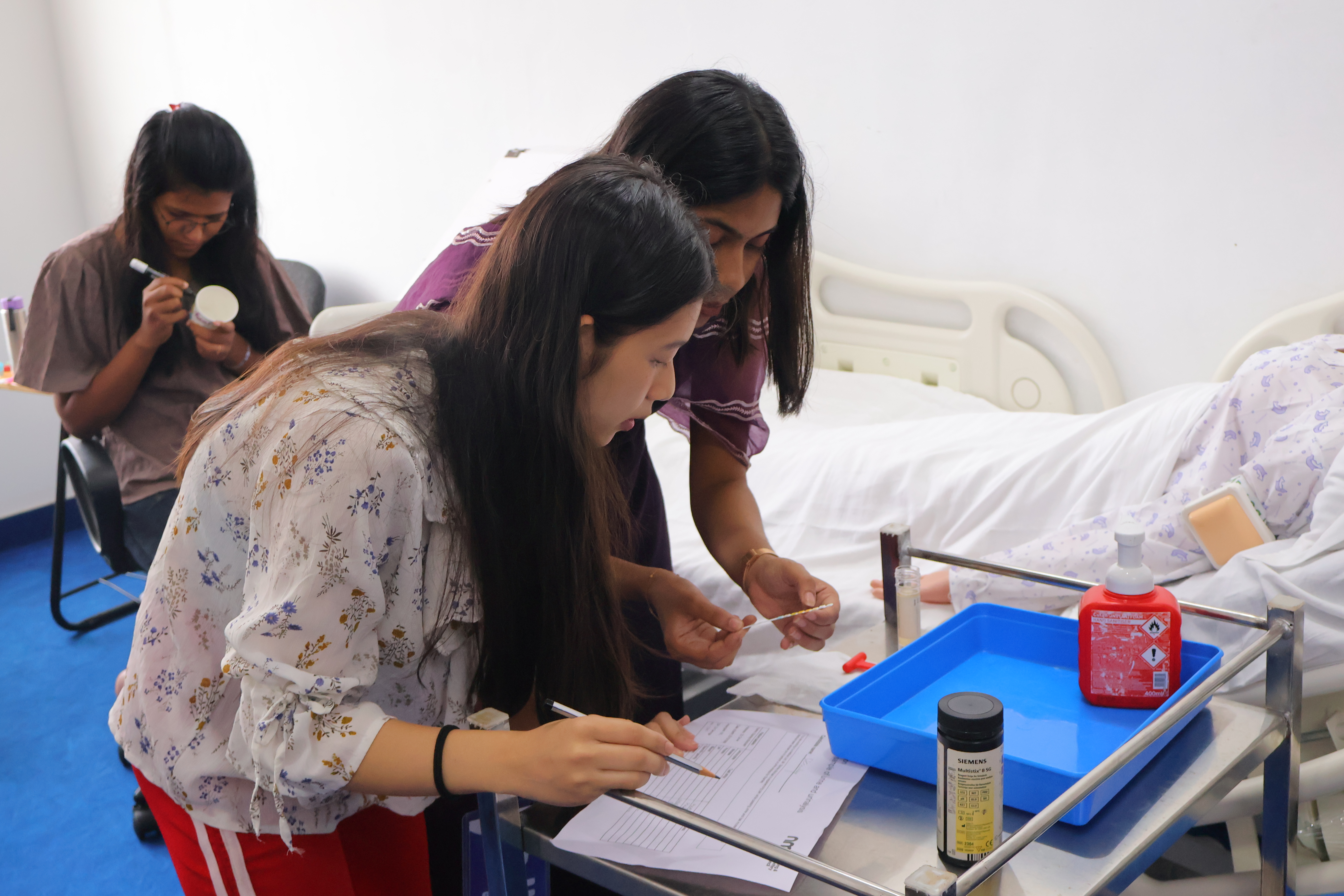
UK Nursing OSCE Mock Exam Practice: Sample Stations, Marking Checklists and Self-Assessment Tips


Preparing for the UK Nursing Objective Structured Clinical Examination (OSCE) can feel challenging, especially when you need to demonstrate clinical skills, patient safety, communication and professional judgement under time pressure. Practising with realistic mock stations is one of the most effective ways to become familiar with the exam format and identify areas for improvement.
Whether you are an internationally educated nurse preparing for your UK nursing registration or revising for an upcoming OSCE, structured practice can help you approach each station with greater confidence.
In this guide, we explain how to practise UK Nursing OSCE mock exams, explore sample stations, provide practical marking checklists and share self-assessment tips to help you prepare more effectively.
What Is the UK Nursing OSCE?
The UK Nursing OSCE is a practical clinical examination used as part of the registration process for eligible internationally educated nurses and midwives with the Nursing and Midwifery Council (NMC).
It assesses whether candidates can apply their nursing knowledge safely and effectively in simulated clinical situations. Candidates must demonstrate appropriate clinical procedures, communication, documentation, decision-making and professional practice.
The OSCE follows an established assessment framework, and candidates should prepare using the latest official NMC guidance for their examination pathway.
Key areas assessed during OSCE practice include:
● Patient identification and consent
● Infection prevention and control
● Clinical assessment and observation
● Safe medication administration
● Communication and patient-centred care
● Documentation and record-keeping
● Recognition and escalation of clinical concerns
● Professional conduct and patient safety
Why Is Mock Exam Practice Important for the UK Nursing OSCE?
Reading clinical guidelines is important, but practical examination performance requires more than theoretical knowledge. Mock exams allow you to practise applying that knowledge in a structured, timed environment.
1. Build Confidence in Clinical Procedures
Repeated practice helps you become familiar with the sequence of clinical tasks, reducing hesitation during the examination.
2. Improve Time Management
OSCE stations have specific time limits. Practising under timed conditions helps you prioritise essential actions without rushing through important safety checks.
3. Identify Missed Steps
A structured marking checklist helps you recognise omissions, such as failing to confirm patient identity, obtain consent or document an intervention.
4. Strengthen Communication Skills
Mock stations help you practise explaining procedures, responding to patient concerns and using clear, professional language.
5. Develop a Patient-Safety Mindset
Successful performance involves understanding why each action matters. Mock practice encourages you to recognise risks, follow appropriate procedures and escalate concerns when necessary.
UK Nursing OSCE Mock Exam: Sample Practice Stations
The following sample stations are designed for revision and self-assessment. They are educational practice examples, not official NMC examination stations or marking schemes.
Always follow the current NMC candidate guidance, relevant station instructions and the clinical protocols applicable to your practice.
Station 1: Assessment and Vital Signs
Scenario:
You are caring for a patient who reports feeling dizzy and generally unwell. You have been asked to assess the patient, obtain relevant observations and communicate any concerns appropriately.
Your tasks:
1. Introduce yourself and confirm the patient's identity.
2. Explain the assessment and obtain consent.
3. Assess the patient's immediate condition and symptoms.
4. Measure the observations required by the scenario.
5. Interpret the findings in the clinical context.
6. Recognise concerning results and escalate appropriately.
7. Document your findings accurately.
Sample self-assessment checklist
Assessment criterion Completed
Introduced yourself and confirmed patient identity ☐
Explained the assessment and obtained consent ☐
Performed hand hygiene and followed infection-control precautions ☐
Assessed symptoms and relevant clinical history ☐
Measured the required observations accurately ☐
Recognised abnormal findings and clinical deterioration ☐
Escalated concerns using the appropriate pathway ☐
Documented findings clearly and accurately ☐
Practice tip: Do not simply collect observations. Consider what the results mean, whether they indicate deterioration and what action is required.
Station 2: Medication Administration
Scenario:
You have been asked to administer a prescribed medication to a patient. You must check the prescription, confirm the patient's identity, explain the medication and administer it safely according to the station instructions.
Your tasks:
1. Review the medication prescription and relevant patient information.
2. Confirm the patient's identity using the required identifiers.
3. Check allergies and relevant contraindications.
4. Verify the medication, dose, route, timing and other applicable prescription requirements.
5. Explain the medication and obtain consent.
6. Prepare and administer the medication safely.
7. Monitor the patient as appropriate and document the administration.
Sample self-assessment checklist
Assessment criterion Completed
Reviewed the prescription and relevant patient information ☐
Confirmed patient identity ☐
Checked allergies and relevant safety considerations ☐
Verified the medication against the prescription ☐
Explained the medication and obtained consent ☐
Followed hand hygiene and medication-safety procedures ☐
Administered the medication using the correct procedure ☐
Completed appropriate documentation ☐
Practice tip: Never guess a dose, overlook an allergy or proceed when a prescription is unclear. Stop and seek appropriate clarification when required.
Station 3: Wound Care and Aseptic Technique
Scenario:
A patient requires a wound dressing change. You must assess the wound, prepare the necessary equipment and perform the procedure while maintaining appropriate infection-prevention standards.
Your tasks:
1. Introduce yourself, confirm identity and explain the procedure.
2. Obtain consent and assess relevant allergies or sensitivities.
3. Perform hand hygiene and prepare the required equipment.
4. Establish and maintain the appropriate aseptic technique.
5. Remove the existing dressing safely and assess the wound.
6. Apply the new dressing according to the care plan and procedure.
7. Dispose of waste safely and make the patient comfortable.
8. Document the wound assessment and intervention.
Sample self-assessment checklist
Assessment criterion Completed
Confirmed identity and obtained consent ☐
Prepared the equipment and clinical environment ☐
Followed hand hygiene and infection-control precautions ☐
Maintained the required aseptic technique ☐
Assessed the wound and surrounding skin ☐
Applied the dressing appropriately ☐
Disposed of equipment and waste safely ☐
Documented findings and the care provided ☐
Practice tip: Understand the principles of aseptic technique rather than memorising movements alone. Be able to explain how your actions reduce infection risk.
Station 4: Communication and Patient-Centred Care
Scenario:
A patient is anxious about a planned procedure and tells you they do not fully understand why it is necessary. Your role is to address their concerns and support informed decision-making.
Your tasks:
1. Introduce yourself and establish rapport.
2. Explore the patient's concerns using open-ended questions.
3. Listen actively and acknowledge the patient's feelings.
4. Explain relevant information in clear, accessible language.
5. Check the patient's understanding.
6. Respect the patient's preferences, dignity and right to make decisions.
7. Identify questions that require clarification from another healthcare professional.
8. Document relevant discussions in accordance with local policy.
Sample self-assessment checklist
Assessment criterion Completed
Established rapport and introduced yourself ☐
Used open-ended questions ☐
Listened without interrupting or dismissing concerns ☐
Provided clear, appropriate information ☐
Checked understanding ☐
Respected dignity, privacy and autonomy ☐
Recognised the limits of your role ☐
Communicated or documented relevant concerns appropriately ☐
Practice tip: Avoid rushing to provide solutions before understanding the patient's concerns. Good communication combines listening, empathy, clear explanations and respect for patient choice.
Station 5: Clinical Deterioration and Escalation
Scenario:
During a routine assessment, you identify that a patient has developed concerning symptoms and abnormal observations. You must assess the situation, recognise potential deterioration and take appropriate action.
Your tasks:
1. Recognise the signs of possible deterioration.
2. Assess the patient's immediate safety and clinical condition.
3. Call for urgent assistance when indicated.
4. Follow the appropriate emergency or escalation pathway.
5. Communicate relevant findings clearly to the responding team.
6. Continue appropriate monitoring and care within your competence.
7. Document the assessment, actions and escalation.
Sample self-assessment checklist
Assessment criterion Completed
Recognised the significance of the clinical findings ☐
Assessed immediate safety and urgent clinical needs ☐
Sought assistance promptly when indicated ☐
Followed the appropriate escalation pathway ☐
Communicated findings clearly and accurately ☐
Continued appropriate care within competence ☐
Reassessed the patient as appropriate ☐
Documented actions and relevant communications ☐
Practice tip: When a patient is acutely unwell, do not delay urgent escalation to complete a routine checklist. Immediate safety takes priority.
How to Use an OSCE Marking Checklist Effectively
A marking checklist is most useful when it helps you evaluate both what you did and how safely you performed it.
Use the following approach after every mock station.
Step 1: Review the Station Instructions
Before beginning, identify the task, the expected outcome, the available equipment and any specific requirements.
Step 2: Practise Under Timed Conditions
Use the time limit specified for your practice station. If you are using a self-created scenario, establish a realistic time limit and keep it consistent.
Step 3: Record Each Criterion
Mark each checklist item according to your performance:
● Completed correctly: The action was performed safely and appropriately.
● Partially completed: The action was attempted but was incomplete or needed improvement.
● Not completed: The action was omitted or performed incorrectly.
These are suggested self-assessment categories, not official NMC scoring labels.
Step 4: Identify Safety-Critical Omissions
Review any missed actions involving patient identification, consent, infection prevention, medication safety, recognition of deterioration or escalation.
Consider the potential consequences of each omission and how you can prevent it in future practice.
Step 5: Repeat the Station
Practise the same station again after reviewing your feedback. Repetition helps you determine whether you have corrected the problem rather than simply memorised the checklist.
OSCE Self-Assessment Scorecard
Use this simple scorecard after each practice session to monitor your progress.
Performance area Score out of 5
Communication and consent ___ / 5
Patient identification and safety ___ / 5
Clinical knowledge and decision-making ___ / 5
Technical skills and procedure ___ / 5
Infection prevention and control ___ / 5
Documentation and escalation ___ / 5
Time management ___ / 5
Total ___ / 35
Suggested self-assessment scale:
● 1: Significant support needed.
● 2: Several important areas need improvement.
● 3: Developing consistency, with some omissions.
● 4: Generally safe and consistent, with minor improvements needed.
● 5: Consistently safe, complete and well-organised performance.
This scorecard is a personal progress-tracking tool, not an official examination pass mark. A high overall score should never compensate for an unsafe action or a serious omission.
Common Mistakes to Avoid During OSCE Practice
Even candidates with strong theoretical knowledge can lose confidence when they overlook basic clinical and professional responsibilities.
1. Memorising Procedures Without Understanding Them
Memorising a sequence may help initially, but you must understand why each action is required and how to adapt safely to the scenario.
2. Forgetting Patient Identification
Always follow the required patient-identification procedure before providing care or administering medication.
3. Missing Consent and Explanations
Explain what you intend to do, check the patient's understanding and obtain consent as appropriate. Respect the patient's right to refuse or withdraw consent.
4. Neglecting Infection Prevention
Hand hygiene, appropriate protective equipment and aseptic technique should be applied according to the procedure and clinical circumstances.
5. Ignoring Abnormal Findings
Collecting clinical observations is not enough. You must recognise concerning results, consider the patient's overall condition and take appropriate action.
6. Poor Documentation
Practise recording findings, interventions, relevant discussions and escalation clearly, accurately and in accordance with applicable documentation requirements.
7. Spending Too Long on One Task
Learn to prioritise essential actions and work efficiently within the station's time limit without compromising safety.
8. Failing to Review Performance
Repeated practice without feedback may reinforce mistakes. Review your checklist, obtain feedback from a suitably qualified supervisor or tutor and repeat the station.
A 7-Day UK Nursing OSCE Mock Exam Practice Plan
A structured revision plan can help you practise consistently while leaving enough time to review mistakes.
Day Practice focus Goal
Day 1 Review the latest OSCE guidance and identify weak areas Understand requirements
Day 2 Assessment and vital signs Improve assessment and interpretation
Day 3 Medication administration Strengthen medication safety
Day 4 Wound care and aseptic technique Improve procedural consistency
Day 5 Communication and patient-centred care Develop clear communication
Day 6 Clinical deterioration and escalation Practise prioritisation and decision-making
Day 7 Timed mock stations and feedback Review progress and target weaknesses
Adapt this schedule to your experience, available practice resources and the current examination requirements. If your exam pathway includes additional station types, incorporate them into your revision plan.
Tips to Improve Your UK Nursing OSCE Performance
Practise aloud. Verbalise relevant explanations, safety checks and clinical reasoning where appropriate. This helps you become comfortable communicating clearly during an assessment.
Use a consistent structure. Develop a reliable approach to introductions, identity checks, consent, assessment, intervention, evaluation and documentation, adapting it to each station.
Understand clinical reasoning. Ask yourself what you have found, what it means for the patient and what action is required.
Seek constructive feedback. A nursing tutor or appropriately qualified supervisor can identify unsafe assumptions, technical errors and communication issues that you may overlook.
Practise realistic scenarios. Use the available equipment and follow the station instructions as closely as possible.
Review official guidance. Use the current NMC OSCE information for your examination provider and pathway rather than relying exclusively on older notes or unofficial checklists.
Prioritise safe practice over speed. Efficiency improves with repetition, but patient safety, appropriate consent and sound clinical judgement must remain central.
UK Nursing OSCE mock exam practice is an opportunity to develop clinical confidence, strengthen decision-making and identify areas that require further preparation.
By practising sample stations, using structured self-assessment checklists and reviewing your performance regularly, you can build a more organised approach to the examination. Focus on understanding the reasons behind each action, maintaining patient safety and communicating professionally throughout every station.
Remember that these sample stations and scorecards are revision tools, not official NMC marking schemes. Always check the latest official guidance and use appropriate clinical standards when preparing for your assessment.
Preparing for your UK Nursing OSCE?
Join ONT GLOBAL for OSCE preparation support and practice resources to help you work towards your nursing registration in the UK.
Practice with purpose. Learn from every station. Build confidence in safe nursing care.