Adult Nursing vs Children’s Nursing OSCE: Key Differences Candidates Should Understand


Preparing for the Nursing and Midwifery Council (NMC) Objective Structured
Clinical Examination (OSCE) is an important step for
internationally educated nurses who want to register and work in the UK.
Although Adult Nursing and Children’s Nursing OSCEs assess professional
competence, patient safety and clinical decision-making, the two pathways focus
on different patient populations and nursing priorities.
Understanding these differences can help candidates choose the right
preparation materials, practise relevant clinical skills and approach the
examination with greater confidence.
At ONT Global, we understand that effective OSCE preparation involves
more than memorising procedures. Candidates need to demonstrate safe,
evidence-based and patient-centred nursing practice in line with UK standards.
In this guide, we explain the key differences between Adult Nursing
and Children’s Nursing OSCEs, including clinical scenarios, communication,
medication safety, assessment techniques and preparation strategies.
The OSCE is the practical part of the NMC Test of Competence for
eligible internationally educated nurses seeking UK registration. It assesses
whether candidates can apply their knowledge and clinical skills at the level
expected of a newly registered nurse in the UK.
Candidates are assessed on their ability to assess patients, plan
care, implement appropriate interventions, evaluate outcomes and demonstrate
professional values.
The examination is pathway-specific. Adult Nursing candidates prepare
for adult patient care, while Children’s Nursing candidates must demonstrate
competence in caring for babies, children and young people within the scope of
their pathway.
Candidates should consult the official NMC preparation materials and
the relevant nursing blueprint before starting their revision.
|
Area |
Adult Nursing
OSCE |
Children’s
Nursing OSCE |
|
Patient population |
Adults, including older people |
Babies, children and young people |
|
Assessment focus |
Adult health conditions, physical observations and changes in
clinical status |
Age-appropriate assessment, growth, development and recognition of
deterioration |
|
Communication |
Direct communication with adult patients, including those with
communication difficulties |
Communication with children and their parents or carers, adapted to
the child's developmental stage |
|
Medication safety |
Correct medication, dosage, route, allergies and patient-specific
considerations |
All standard medication safety principles, with particular attention
to weight-based calculations where applicable and age-appropriate dosing |
|
Clinical priorities |
Management of adult conditions, chronic illnesses, acute
deterioration and recovery |
Recognition of childhood illness, paediatric deterioration,
hydration and age-appropriate interventions |
|
Safeguarding |
Recognition and reporting of abuse, neglect and vulnerability in
adults |
Recognition and reporting of child abuse, neglect and other
safeguarding concerns |
|
Family involvement |
Involvement according to the adult patient's wishes, capacity and
care needs |
Appropriate involvement of parents or carers alongside the child's
rights, needs and confidentiality |
|
Preparation approach |
Practise adult-specific assessments, clinical procedures and
decision-making |
Practise paediatric assessment, communication, clinical procedures
and child-specific safety principles |
Important: Both pathways require safe practice, clear
communication, infection prevention, accurate documentation and professional
accountability. The clinical context and application of these principles
differ.
Adult Nursing assessment focuses on identifying health problems,
establishing a clinical baseline and recognising changes in an adult patient's
condition.
Candidates should practise:
●
Taking a relevant clinical history and
identifying presenting symptoms.
●
Measuring and interpreting vital signs.
●
Assessing pain and documenting findings.
●
Identifying risks such as falls, pressure
injuries and dehydration.
●
Recognising deterioration and escalating
concerns promptly.
●
Using assessment findings to develop an
appropriate nursing care plan.
For example, a candidate may be asked to assess an adult patient
experiencing breathlessness. The candidate should gather relevant information,
assess respiratory status, identify warning signs and explain appropriate
escalation and monitoring.
Children’s Nursing assessment requires an understanding of how normal
observations, communication and clinical presentation vary with age and
development.
Candidates should focus on:
●
Obtaining relevant information from the child
and parent or carer.
●
Assessing the child according to their age and
developmental stage.
●
Recognising signs of childhood illness and
deterioration.
●
Interpreting observations using appropriate
paediatric reference ranges.
●
Assessing hydration, feeding and other
relevant needs.
●
Recognising when urgent escalation is
necessary.
For example, a child presenting with fever may require assessment of
their general appearance, responsiveness, breathing, hydration and other signs
of serious illness. The candidate must use age-appropriate assessment
principles rather than automatically applying adult reference ranges.
Key difference: Adult Nursing assessment centres on adult
physiology and clinical needs, whereas Children’s Nursing assessment must
account for age, development and the child's ability to communicate symptoms.
Communication is essential in both OSCE pathways, but Children’s
Nursing introduces additional considerations.
Candidates should demonstrate respect, empathy and clear explanations
when communicating with adult patients. They should:
●
Introduce themselves and explain their role.
●
Confirm the patient's identity using approved
identifiers.
●
Obtain informed consent before appropriate
procedures.
●
Respect privacy, dignity and confidentiality.
●
Use accessible language and check
understanding.
●
Involve patients in decisions about their
care.
Candidates should also know how to adapt communication when a patient
has hearing difficulties, cognitive impairment, language barriers or other
additional needs.
Children’s Nursing candidates must communicate in a way that is
appropriate to the child's age, understanding and developmental abilities.
This may involve:
●
Using simple, reassuring language.
●
Explaining procedures in a child-friendly
manner.
●
Listening to the child's concerns and
preferences.
●
Involving parents or carers appropriately.
●
Seeking the child's participation and assent
where appropriate.
●
Considering consent, competence,
confidentiality and safeguarding requirements according to the circumstances.
For example, before performing a procedure on a young child, the nurse
should explain what will happen in understandable language, reduce unnecessary
anxiety and involve the parent or carer appropriately.
However, parental involvement does not mean that the child's own voice
should be ignored. Children should be treated with dignity and their views
considered in accordance with their age, maturity and applicable legal and
professional requirements.
OSCE tip: Practise explaining clinical procedures
aloud. In Children’s Nursing, practise speaking directly to the child as well
as communicating with the parent or carer.
Both pathways assess practical nursing skills, but the procedures and
clinical scenarios should be prepared for according to the relevant NMC
blueprint.
Depending on the current examination materials, preparation may
include:
●
Aseptic non-touch technique (ANTT).
●
Medication administration.
●
Blood glucose monitoring.
●
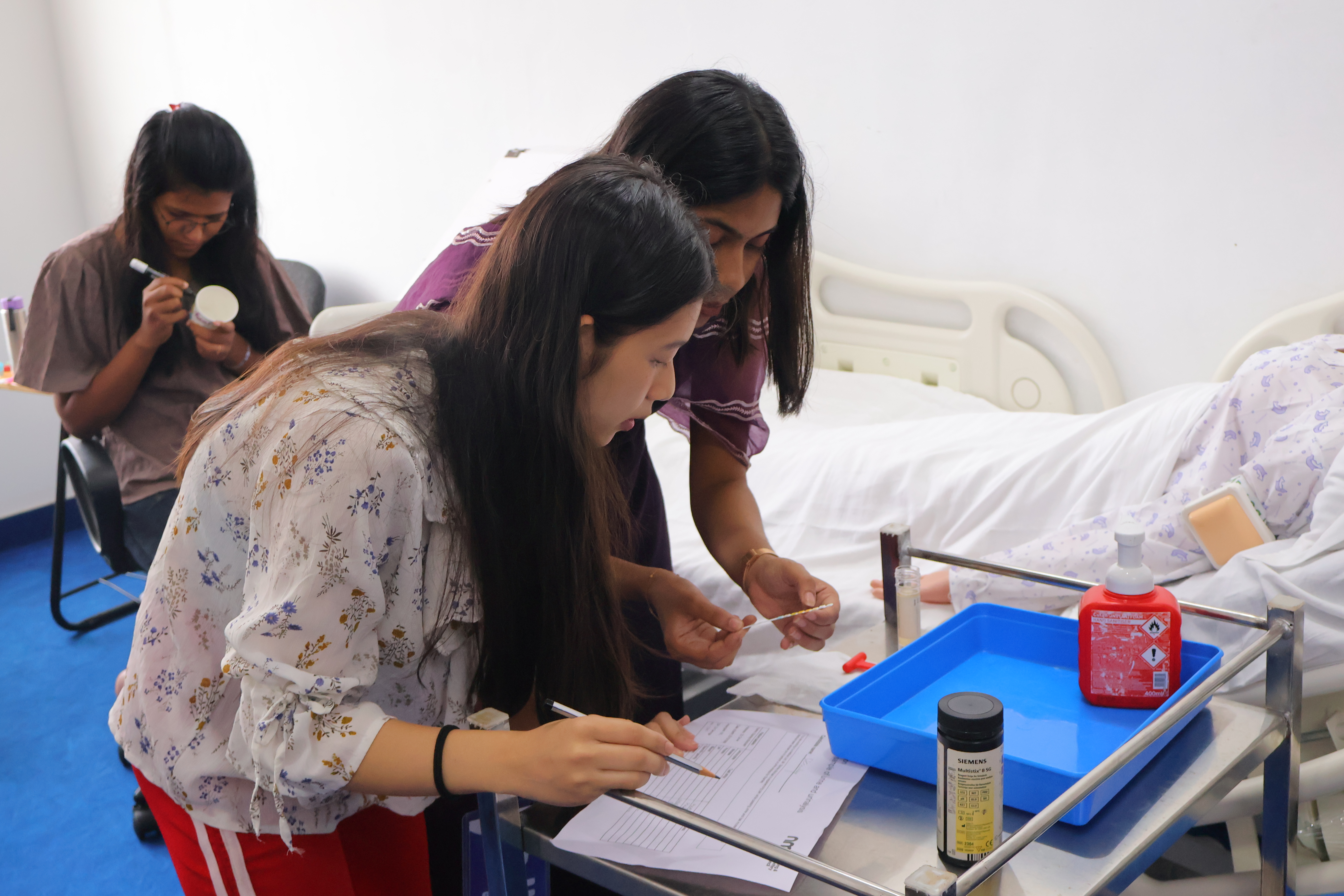
Urine sampling and urinalysis.
●
Fluid balance monitoring.
●
Catheter-related procedures.
●
Respiratory assessment and relevant
interventions.
●
Recognition and escalation of a deteriorating
adult patient.
Candidates must demonstrate appropriate preparation, patient
identification, infection prevention, explanation of the procedure, safe
technique and documentation.
Children’s Nursing preparation may include:
●
Paediatric observations and assessment.
●
Age-appropriate medication administration.
●
Weight-based medication calculations where
applicable.
●
Recognition of fever and signs of
deterioration.
●
Assessment of hydration and fluid balance.
●
Appropriate communication before and during
procedures.
●
Relevant paediatric emergency and basic life
support principles.
For example, medication administration to a child requires careful
attention to the prescribed dose, formulation, route, allergies and relevant
weight-based calculations. Candidates must follow the applicable prescription,
local policy and current professional guidance.
The NMC has previously announced changes involving insulin pens in
both Adult and Children’s Nursing OSCEs. This illustrates why candidates should
use the latest official equipment lists and preparation documents rather than
relying exclusively on older notes.
Key difference: The fundamental principles of safe nursing
procedures remain the same, but Children’s Nursing requires additional
attention to paediatric equipment, developmental needs and age-appropriate
clinical practice.
Medication safety is a critical area in both examinations.
Candidates should understand how to:
●
Check the prescription and confirm patient
identity.
●
Review allergies and relevant
contraindications.
●
Verify the medication, dose, route and timing.
●
Complete calculations accurately.
●
Explain the medication to the patient.
●
Monitor for relevant adverse effects.
●
Document administration or omission
appropriately.
Children’s Nursing candidates must demonstrate the same safety
principles while recognising the additional risks associated with administering
medication to children.
Revision should include:
●
Understanding prescribed doses in relation to
the child's weight when indicated.
●
Converting units accurately.
●
Calculating doses and volumes using the
correct formulation and concentration.
●
Checking the prescribed dose against relevant
guidance and maximum dose limits.
●
Confirming that the formulation and route are
suitable for the child.
●
Seeking clarification if an order is
incomplete, unclear or potentially unsafe.
For example, a calculation involving milligrams per kilogram may
require the candidate to multiply the prescribed dose per kilogram by the
child's weight, then determine the required volume from the available
concentration.
Candidates must not guess missing prescription details or proceed with
a potentially unsafe dose.
OSCE tip: Practise medication calculations regularly
and show your working clearly. Accuracy, correct units and appropriate safety
checks are essential.
Recognising deterioration and taking appropriate action are
fundamental nursing responsibilities in both pathways.
Candidates should practise identifying concerning changes in vital
signs, consciousness, respiratory status, circulation and overall clinical
presentation.
Preparation should include:
●
Recognising abnormal observations.
●
Understanding the significance of trends.
●
Escalating concerns without delay.
●
Communicating clearly with the appropriate
clinical team.
●
Reassessing the patient after interventions.
●
Documenting findings and actions accurately.
Candidates must recognise that a seriously ill child may deteriorate
rapidly and may show different signs from an adult.
Preparation should include:
●
Assessing the child's appearance, breathing
and circulation.
●
Recognising changes in responsiveness and
behaviour.
●
Interpreting observations using
age-appropriate reference ranges.
●
Identifying signs of respiratory distress and
dehydration.
●
Recognising fever-related warning signs.
●
Escalating concerns promptly and following the
relevant paediatric assessment and emergency procedures.
For instance, a child who becomes unusually drowsy, develops increased
work of breathing or shows signs of poor circulation requires prompt assessment
and escalation.
Key difference: Both pathways assess clinical judgement, but
Children’s Nursing requires specific knowledge of paediatric warning signs and
age-related differences in physiological observations.
Safeguarding, confidentiality, consent, dignity and professional
accountability are important in both OSCE pathways.
Candidates should understand how to recognise and respond to concerns
involving:
●
Abuse or neglect.
●
Exploitation or coercion.
●
Vulnerable adults.
●
Capacity and informed decision-making.
●
Confidentiality and appropriate information
sharing.
●
Concerns about unsafe care.
Nurses should follow relevant safeguarding procedures, document
concerns factually and report them through appropriate channels.
Children’s Nursing candidates must understand their responsibilities
when a child may be experiencing abuse, neglect, exploitation or another
safeguarding risk.
Candidates should practise how to:
●
Recognise concerning signs and disclosures.
●
Listen calmly and take the child's concerns
seriously.
●
Avoid leading questions or making promises of
secrecy.
●
Record the child's words and relevant
observations accurately.
●
Report concerns promptly through the
appropriate safeguarding pathway.
●
Share information lawfully and appropriately
to protect the child.
Important: Safeguarding scenarios assess professional
judgement as well as knowledge. Candidates should demonstrate a calm,
respectful response and understand when immediate action is required.
Care planning connects assessment findings with appropriate
interventions and evaluation.
Adult Nursing candidates should be able to identify patient needs,
establish priorities and develop an individualised plan of care.
For example, a patient with reduced mobility may require assessment of
falls risk, support with movement, pressure area prevention, pain management
and appropriate patient education.
The candidate should explain why interventions are necessary,
implement them safely and evaluate whether the patient's needs have been met.
Children’s Nursing care planning must account for the child's age,
developmental needs, family circumstances and clinical condition.
For example, a child admitted with vomiting and diarrhoea may require
assessment of hydration, monitoring of fluid balance, appropriate interventions
and clear communication with the parent or carer.
The nurse should evaluate the child's response to care and escalate
concerns when necessary.
Key difference: Adult care plans focus on the individual
adult's health and personal circumstances, while children's care plans also
consider development, family involvement and the child's particular safety
needs.
Both Adult Nursing and Children’s Nursing OSCEs follow the NMC Test of
Competence framework, but their station content and marking criteria are
specific to the relevant nursing field.
Depending on the current examination materials, candidates may
encounter stations involving:
●
Assessment, planning, implementation and
evaluation (APIE).
●
Practical clinical skills.
●
Professional values.
●
Evidence-based practice.
The precise stations, timings, instructions and assessment criteria
can change as the NMC updates the examination.
For this reason, candidates should not assume that the two pathways
have identical station content or that an older station list will remain
current.
Before booking or attending the examination, review the latest
official NMC resources for your field, including the relevant blueprint,
marking criteria, supporting documents and station timings.
A structured preparation plan can help candidates develop clinical
confidence and avoid common mistakes.
Identify the competencies and clinical skills relevant to the Adult
Nursing pathway. Use the official NMC resources to guide your revision.
Practise assessing an adult patient, identifying nursing priorities,
planning appropriate care, implementing interventions and evaluating outcomes.
Practise relevant procedures using the current equipment list and
marking criteria. Focus on safe technique, infection prevention, patient
identification and documentation.
Practise introducing yourself, explaining procedures, obtaining
consent and communicating concerns clearly.
Simulate timed examination conditions and request feedback on missed
steps, clinical reasoning and professional behaviour.
Use official NMC resources and relevant evidence-based guidance to
understand the rationale behind nursing interventions.
Children’s Nursing candidates should follow a similarly structured
plan with additional emphasis on paediatric assessment and communication.
Review the current paediatric competencies, station materials and
marking criteria published for the relevant pathway.
Learn how observations, symptoms and communication differ across
babies, younger children and older children.
Practise weight-based calculations where applicable, dose and volume
conversions, concentration checks and safe medication administration.
Rehearse explaining procedures to children in developmentally
appropriate language while involving parents or carers appropriately.
Practise recognising paediatric warning signs, escalating concerns and
responding professionally to safeguarding disclosures.
Use realistic scenarios to improve your confidence, time management
and ability to adapt your nursing approach to the child's age and needs.
Regardless of the pathway, avoid these common preparation mistakes:
The right preparation programme depends on your nursing registration
pathway, previous clinical experience and areas where you need additional
practice.
If you are preparing for Adult Nursing, look for training that covers
adult-specific assessment, clinical skills, care planning, professional values
and deterioration scenarios.
If you are preparing for Children’s Nursing, prioritise paediatric
assessment, child-friendly communication, medication safety, safeguarding and
age-appropriate clinical decision-making.
A useful preparation programme should offer structured teaching,
realistic practice scenarios, feedback on clinical performance and guidance
aligned with the relevant NMC materials.
ONT
Global provides support for healthcare professionals preparing for
international nursing examinations and UK career opportunities. Explore the
available OSCE preparation resources to identify support appropriate to your
pathway.
Adult
Nursing and Children’s Nursing OSCEs share the same
fundamental commitment to safe, compassionate and evidence-based nursing
practice. However, candidates must understand the distinct clinical priorities
of their chosen pathway.
Adult Nursing preparation focuses on adult assessment, clinical
conditions, care planning and deterioration. Children’s Nursing preparation
requires additional attention to development, paediatric observations,
child-friendly communication, medication safety and safeguarding.
The best preparation strategy is to study the correct NMC blueprint,
practise relevant clinical scenarios, use up-to-date marking criteria and
obtain constructive feedback.
Preparing for your UK nursing OSCE? Visit ONT Global
to explore relevant OSCE preparation support and take the next step towards
your UK nursing career.
●
NMC Test of Competence preparation materials: https://www.nmc.org.uk/registration/joining-the-register/toc/toc-nursing-and-midwifery/resources/