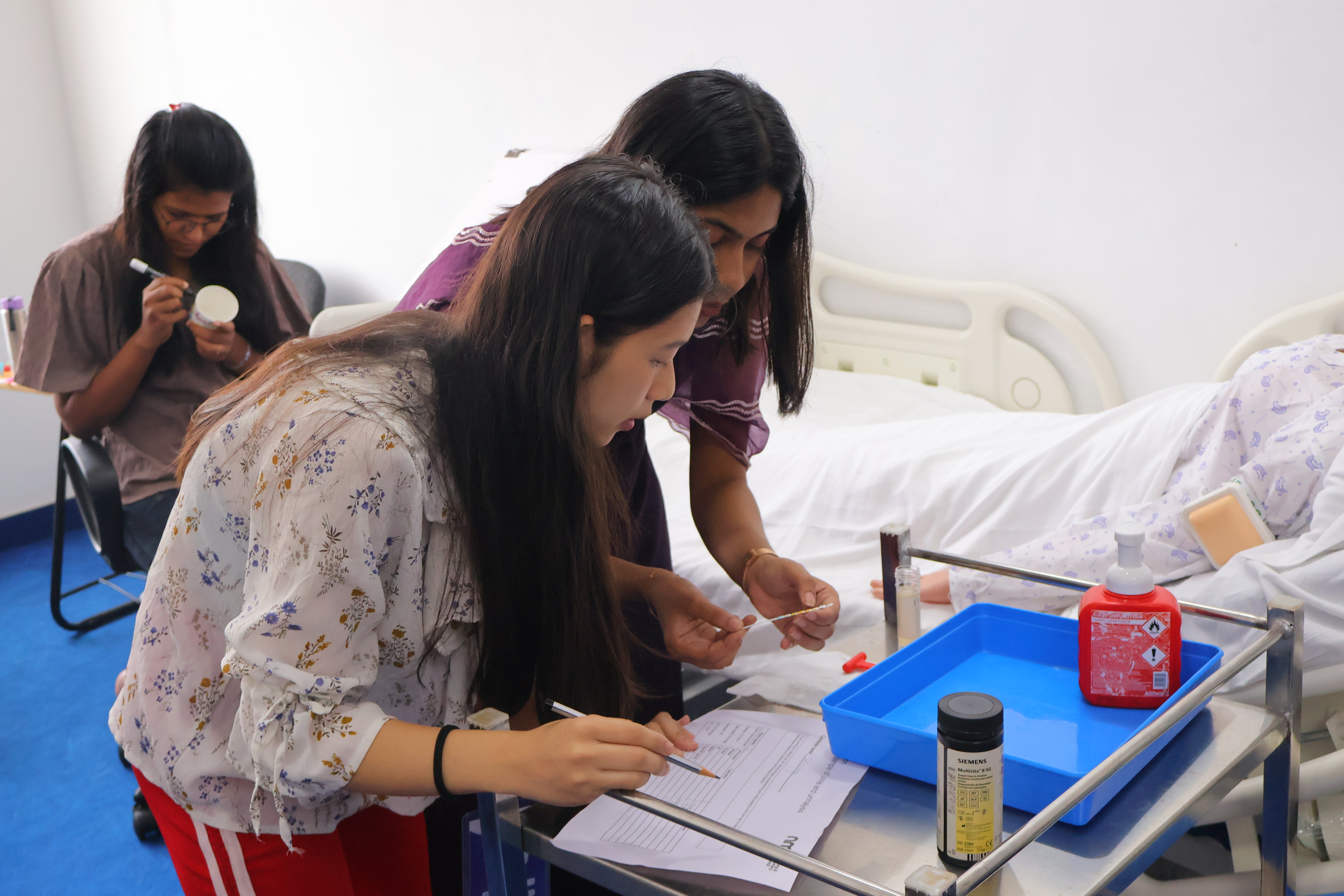
UK Nursing OSCE Professional Values and Behaviours: What Candidates Need to Know

Preparing for the UK Nursing OSCE involves much more than memorising clinical procedures and completing practical skills. To succeed, international nurses must demonstrate that they can practise safely, communicate effectively, protect patient dignity, and behave in accordance with the professional standards expected of a nurse in the UK.
Professional values and behaviours are therefore an essential part of OSCE preparation. They influence how you communicate with patients, obtain consent, maintain confidentiality, respond to concerns, work with colleagues, and make decisions throughout every station.
This guide explains what professional values and behaviours mean in the UK Nursing OSCE, why they are important, and how candidates can demonstrate them confidently during their examination.
What Are Professional Values and Behaviours?
Professional values and behaviours refer to the attitudes, actions, communication, and ethical standards expected from a registered nurse.
In an OSCE, examiners do not assess only whether you can complete a clinical procedure. They also observe how you perform it.
For example, while completing a clinical assessment or practical procedure, candidates may be expected to demonstrate:
● Respect for the patient
● Clear and compassionate communication
● Patient-centred care
● Professionalism
● Safe practice
● Confidentiality
● Informed consent
● Respect for dignity and privacy
● Effective teamwork
● Accountability
● Appropriate escalation of concerns
A candidate may know every step of a procedure but still perform poorly if they ignore the patient, fail to obtain consent, or behave in an unsafe or unprofessional manner.
Therefore, professional behaviour should be present from the moment you enter the station until you complete and close the interaction.
Why Are Professional Values Important in the OSCE?
The OSCE is designed to assess whether a nurse can apply knowledge and skills safely in a realistic healthcare environment.
Nursing is not simply about performing tasks. Every clinical action must be combined with professional judgement and patient-centred care.
For example, before taking a patient's observations, a professional nurse should:
1. Introduce themselves.
2. Confirm the patient's identity.
3. Explain the procedure.
4. Obtain consent.
5. Protect the patient's privacy and dignity.
6. Perform the procedure safely.
7. Communicate findings appropriately.
8. Escalate concerns when necessary.
9. Document or hand over information accurately.
These professional behaviours demonstrate that the candidate understands their responsibilities as a nurse.
Key Professional Values and Behaviours for OSCE Candidates
1. Treat Every Patient With Dignity and Respect
Respect is one of the most important principles of professional nursing practice.
Every patient should be treated as an individual, regardless of their:
● Age
● Gender
● Religion
● Culture
● Disability
● Background
● Personal beliefs
● Communication needs
During an OSCE station, candidates should demonstrate respect through both verbal and non-verbal communication.
Examples of respectful behaviour
● Address the patient appropriately.
● Ask how they prefer to be addressed.
● Speak politely and clearly.
● Listen without interrupting.
● Avoid making assumptions.
● Respect personal preferences.
● Maintain privacy during examinations or procedures.
● Provide appropriate covering when exposing parts of the body.
Example
Instead of simply saying:
"I need to examine your abdomen."
You could say:
"I would like to examine your abdomen to help assess your condition. This will involve looking at and gently touching your abdomen. Is that okay with you?"
This approach demonstrates respect, communication, and informed consent.
2. Always Introduce Yourself Clearly
A professional introduction helps establish trust and is an important part of patient communication.
At the beginning of the station, introduce yourself clearly.
Example
"Good morning. My name is [Name], and I am one of the nurses looking after you today."
Depending on the scenario, you may also confirm your role and explain the purpose of the interaction.
For example:
"I have been asked to assess your condition and carry out some observations. I will explain everything as we go along."
A clear introduction helps the patient understand who you are and why you are interacting with them.
3. Confirm the Patient's Identity
Patient identification is a critical element of safe nursing practice.
Before carrying out an assessment, administering medication, or performing a procedure, ensure that you follow the appropriate identification process required for the scenario.
Candidates should avoid making assumptions about a patient's identity.
Professional practice means following the correct safety procedures before proceeding.
Example
"Before we begin, could you please tell me your full name and date of birth?"
You should also check relevant identification details according to the requirements of the station.
This demonstrates:
● Patient safety
● Attention to detail
● Professional accountability
● Safe clinical practice
4. Explain the Procedure Clearly
Patients have the right to understand what is happening to them.
Before starting a procedure, explain:
● What you are going to do
● Why the procedure is necessary
● What the patient may experience
● How long it may take, where relevant
● Whether there may be any discomfort
Avoid using complicated medical terminology unless it is appropriate for the patient's level of understanding.
Example
Instead of saying:
"I am going to perform a venepuncture."
You could say:
"I need to take a small sample of blood from a vein in your arm. You may feel a short, sharp sensation when the needle is inserted."
Clear explanations help patients make informed decisions and feel more comfortable.
5. Obtain Valid Consent
Consent is an essential part of professional nursing practice.
Before touching a patient or carrying out a procedure, ensure that the patient understands what is being proposed and has agreed to it.
Consent should not be treated as a simple phrase that candidates memorise and repeat.
The patient should have enough information to understand what will happen.
A good consent process includes:
● Explaining the procedure
● Checking the patient's understanding
● Giving the patient an opportunity to ask questions
● Confirming that they agree to proceed
● Respecting their right to refuse
Example
"I have explained what the procedure involves. Do you have any questions before we begin?"
Then:
"Are you happy for me to proceed?"
If a patient refuses a procedure, do not force them to continue. Explore their concerns appropriately and follow the correct process for the scenario.
6. Maintain Privacy and Dignity
Protecting privacy and dignity is particularly important during physical examinations and procedures.
Before exposing any part of the patient's body, consider whether it is necessary and ensure that privacy is maintained.
Candidates should consider:
● Closing curtains or doors where appropriate
● Using appropriate draping or covering
● Exposing only the area necessary
● Explaining what they are doing
● Asking the patient whether they are comfortable
Example
"I need to examine your lower leg. I will make sure that only the area I need to examine is exposed. Please let me know if you feel uncomfortable at any point."
This demonstrates a patient-centred and respectful approach.
7. Communicate With Compassion and Empathy
Technical competence alone does not make effective nursing care.
Patients may feel:
● Anxious
● Scared
● Embarrassed
● Confused
● Frustrated
● In pain
A professional nurse should recognise these emotions and respond appropriately.
Example
If a patient says:
"I'm really worried about what is happening to me."
Avoid responding with:
"Don't worry."
Instead, you could say:
"I understand that this situation may feel worrying. Would you like to tell me more about what is concerning you?"
This demonstrates empathy and encourages the patient to communicate openly.
8. Listen Actively
Communication is not only about talking. Listening is equally important.
During OSCE stations, candidates should demonstrate active listening by:
● Maintaining appropriate eye contact
● Allowing the patient to speak
● Avoiding unnecessary interruptions
● Clarifying information
● Responding appropriately
● Summarising important information
Example
"So, if I understand correctly, the pain started this morning and has become worse over the last few hours. Is that correct?"
This helps confirm that you have understood the patient's concerns accurately.
9. Use Patient-Centred Communication
Every patient is different. Effective communication should be adapted to the individual's needs.
Some patients may have:
● Hearing difficulties
● Visual impairments
● Learning disabilities
● Limited English proficiency
● Communication difficulties
● Anxiety or distress
As a professional nurse, you should recognise when communication needs to be adapted.
Examples
You may need to:
● Speak slowly and clearly.
● Use simple language.
● Reduce distractions.
● Allow additional time.
● Use appropriate communication support.
● Check understanding.
Never assume that a patient understands simply because you have provided information.
A useful approach is to ask the patient to explain important information back to you in their own words when appropriate.
10. Maintain Confidentiality
Patients trust healthcare professionals with sensitive and personal information.
Professional nurses must respect confidentiality and handle information appropriately.
During an OSCE, demonstrate confidentiality by avoiding unnecessary discussion of patient information and ensuring that sensitive conversations are handled professionally.
Important principles include:
● Do not discuss patient information unnecessarily.
● Do not share confidential information in inappropriate settings.
● Handle documentation carefully.
● Respect patient privacy when communicating with relatives or others.
If someone requests information about a patient, consider whether they have the appropriate authority and whether the patient has consented to information being shared.
11. Demonstrate Professional Boundaries
A nurse should build a therapeutic and professional relationship with the patient.
Professional boundaries help protect both the patient and the nurse.
During the OSCE, maintain an appropriate professional manner.
Avoid:
● Overly casual behaviour
● Inappropriate jokes
● Unnecessary personal information
● Making promises that you cannot keep
● Allowing personal opinions to influence care
Your communication should remain warm, compassionate, respectful, and professional.
12. Prioritise Patient Safety
Patient safety should always be at the centre of your practice.
Before, during, and after a procedure, consider possible risks.
Ask yourself:
● Is it safe to proceed?
● Have I checked the patient's identity?
● Have I explained the procedure?
● Have I obtained consent?
● Have I checked for relevant risks?
● Do I need help?
● Do I need to stop the procedure?
● Do I need to escalate a concern?
A professional nurse should never continue with an unsafe action simply to complete a task.
If something appears wrong, pause and address the concern appropriately.
13. Recognise and Escalate Deterioration
One of the most important professional responsibilities of a nurse is recognising when a patient's condition is deteriorating.
If assessment findings are abnormal, candidates should demonstrate appropriate action.
Depending on the scenario, this may involve:
1. Recognising the abnormal finding.
2. Reassessing the patient.
3. Taking appropriate immediate action.
4. Calling for help.
5. Escalating concerns to the appropriate healthcare professional.
6. Communicating clearly using a structured handover approach.
7. Continuing to monitor the patient.
Do not simply record an abnormal observation and move on.
Professional behaviour means recognising when further action is required.
14. Know Your Limitations
A safe and professional nurse understands the limits of their competence.
If you are unsure how to perform a task or encounter a situation beyond your level of competence, the appropriate response is not to guess.
Instead, seek appropriate support or supervision.
Example
"I would seek assistance from an appropriate senior member of staff and follow the relevant local policy."
Recognising your limitations demonstrates:
● Professional accountability
● Patient safety awareness
● Good clinical judgement
● Willingness to seek support
15. Speak Up About Concerns
Professional nursing practice includes the responsibility to raise concerns when patient safety may be at risk.
During scenario-based OSCE stations, you may encounter situations involving:
● Unsafe practice
● Medication errors
● Patient deterioration
● Poor communication
● Safeguarding concerns
● Professional misconduct
Candidates should demonstrate that they would take appropriate action rather than ignore a potential risk.
Depending on the situation, this may involve:
● Ensuring immediate patient safety
● Informing the appropriate senior professional
● Following the relevant reporting process
● Documenting concerns appropriately
Patient safety should always be the priority.
16. Work Effectively With the Multidisciplinary Team
Nurses do not work alone.
Effective healthcare depends on communication and collaboration between professionals.
During OSCE scenarios, candidates may need to communicate with:
● Nurses
● Doctors
● Healthcare assistants
● Pharmacists
● Therapists
● Senior staff
Professional communication should be:
● Clear
● Accurate
● Concise
● Relevant
● Respectful
Structured communication tools such as SBAR may be used when handing over important information.
SBAR Structure
S – Situation
What is happening now?
B – Background
What relevant information does the healthcare professional need to know?
A – Assessment
What have you assessed or identified?
R – Recommendation
What action or support do you need?
Using a clear structure can help ensure that important information is communicated safely.
17. Demonstrate Accountability
Accountability means taking responsibility for your professional actions and decisions.
As a nurse, you are expected to:
● Work within your competence.
● Follow appropriate procedures.
● Recognise and respond to mistakes.
● Report concerns.
● Maintain accurate records.
● Take responsibility for the care you provide.
During an OSCE, avoid guessing or hiding an error.
If a mistake occurs within a scenario, the safest and most professional response is to recognise it and take appropriate action.
18. Maintain Accurate Documentation
Documentation is an important part of safe patient care.
Records should be:
● Accurate
● Clear
● Relevant
● Timely
● Objective
● Completed according to professional and organisational requirements
Avoid recording assumptions or personal opinions.
Documentation should communicate important information that supports continuity and safety of care.
19. Demonstrate Equality, Diversity and Inclusion
Professional nursing care should be fair, respectful, and free from discrimination.
Candidates should avoid making assumptions about a patient's:
● Lifestyle
● Family
● Culture
● Religion
● Gender
● Relationships
● Health beliefs
Instead, use respectful and inclusive communication.
Example
Rather than making assumptions, ask appropriate questions such as:
"Is there anything we can do to make you more comfortable during your care?"
or:
"Do you have any preferences or needs that you would like us to take into account?"
This demonstrates respect for individual needs.
20. Safeguarding Is Everyone's Responsibility
Nurses may encounter patients who are at risk of harm, abuse, neglect, or exploitation.
During relevant OSCE scenarios, candidates should recognise possible safeguarding concerns and take appropriate action.
This may involve:
● Ensuring immediate safety
● Listening carefully
● Remaining calm and professional
● Avoiding promises of complete secrecy
● Recording information accurately
● Reporting concerns through the appropriate channels
Do not investigate beyond your role unless instructed to do so.
The nurse's responsibility is to recognise concerns, protect the patient, and escalate appropriately.
Professional Behaviour During Different OSCE Stages
Professional values should be demonstrated throughout the entire station.
Before Starting the Procedure
Remember to:
● Perform hand hygiene when appropriate.
● Introduce yourself.
● Confirm patient identity.
● Explain your role.
● Explain the procedure.
● Obtain consent.
● Check for relevant concerns.
● Ensure privacy and dignity.
During the Procedure
Continue to:
● Communicate clearly.
● Observe the patient's comfort.
● Maintain privacy.
● Use safe practice.
● Explain important steps.
● Watch for signs of pain or distress.
● Respond appropriately to concerns.
Do not become so focused on completing the technical procedure that you forget the patient.
After the Procedure
Remember to:
● Ensure the patient is comfortable.
● Check whether they have questions.
● Explain what will happen next.
● Dispose of equipment safely.
● Perform hand hygiene where appropriate.
● Document relevant information.
● Escalate any concerns.
Example closing statement
"The procedure is now complete. Are you feeling comfortable? Do you have any questions or concerns? I will now make sure the relevant information is documented and inform the appropriate member of the healthcare team if necessary."
Common Professional Behaviour Mistakes in the OSCE
Even well-prepared candidates can lose marks by focusing only on technical skills.
Here are some common mistakes.
1. Forgetting to Introduce Yourself
Candidates may enter the station and immediately begin the procedure.
Better approach:
Introduce yourself, explain your role, and establish communication before proceeding.
2. Asking for Consent Without Providing Information
Simply saying:
"Can I proceed?"
may not be enough if you have not explained the procedure.
Better approach:
Explain what you intend to do first, then obtain consent.
3. Ignoring the Patient During the Procedure
Some candidates focus completely on equipment or the assessment checklist.
Better approach:
Continue communicating with the patient throughout the procedure.
For example:
"How are you feeling?"
"Are you comfortable?"
"Please let me know if you experience any pain."
4. Continuing Despite a Safety Concern
If something appears abnormal or unsafe, do not ignore it simply to complete the station.
Better approach:
Recognise the concern and take appropriate action.
5. Using Too Much Medical Terminology
Patients may not understand complex clinical language.
Better approach:
Use simple and clear language, then check understanding.
6. Forgetting Privacy and Dignity
Exposing more of the patient's body than necessary or failing to consider privacy can demonstrate poor professional awareness.
Better approach:
Protect privacy and expose only what is necessary.
7. Not Escalating Abnormal Findings
Recognising a problem is only part of safe nursing practice.
Better approach:
Explain what action you would take and who you would contact.
A Simple Professional Values Framework for OSCE Candidates
A useful way to remember professional behaviour is:
I – Introduce
Introduce yourself and establish communication.
D – Identify
Confirm the patient's identity.
E – Explain
Explain the procedure clearly.
A – Ask for Consent
Ensure the patient understands and agrees.
L – Look After Dignity
Protect privacy, comfort, and dignity.
S – Safety First
Assess risks and follow safe practice.
C – Communicate
Use clear, compassionate, patient-centred communication.
A – Assess and Act
Recognise concerns and take appropriate action.
R – Report
Escalate and communicate important findings.
E – Evaluate
Check the patient's condition, comfort, and understanding.
This framework can help candidates remember that professionalism should be integrated into every OSCE station.
How to Practise Professional Values for the OSCE
Professional behaviour should be practised just like any clinical skill.
1. Practise Every Procedure as a Full Scenario
Do not practise only the technical steps.
Include:
Introduction → Identity Check → Explanation → Consent → Procedure → Communication → Safety → Closure
This helps professional behaviours become natural.
2. Record Yourself Practising
Recording mock practice sessions can help you identify habits such as:
● Speaking too quickly
● Forgetting to introduce yourself
● Using too much medical terminology
● Not checking patient comfort
● Forgetting to close the interaction
Reviewing your performance can help improve both communication and confidence.
3. Practise With a Partner
Ask your practice partner to act as a patient and respond realistically.
They can:
● Ask questions
● Express anxiety
● Refuse a procedure
● Report pain
● Become confused
● Raise concerns
This will help you practise adapting your communication rather than repeating a memorised script.
4. Learn the Reason Behind Every Action
Do not memorise phrases without understanding their purpose.
For example:
Why do we obtain consent?
To respect the patient's autonomy and right to make decisions.
Why do we check identity?
To reduce the risk of providing care or treatment to the wrong patient.
Why do we maintain confidentiality?
To protect private information and maintain trust.
Understanding the reason behind each action will help you respond more naturally during unfamiliar scenarios.
Final Tips for UK Nursing OSCE Candidates
Before entering any OSCE station, remember the following:
● Treat the patient as a person, not a task.
● Introduce yourself clearly.
● Confirm the patient's identity.
● Explain what you are doing.
● Obtain informed consent.
● Maintain privacy and dignity.
● Communicate with empathy.
● Listen actively.
● Use clear and simple language.
● Prioritise patient safety.
● Recognise your limitations.
● Escalate concerns appropriately.
● Maintain confidentiality.
● Work professionally with colleagues.
● Document and communicate important information accurately.
● Always consider what is best for the patient.
Success in the UK Nursing OSCE is not only about remembering clinical steps. Candidates must demonstrate that they can combine clinical knowledge with professionalism, communication, compassion, accountability, and safe decision-making.
Professional values and behaviours should not be treated as an additional checklist to remember at the end of a station. They should be integrated into every interaction with the patient.
The best approach is to practise every OSCE skill as a complete professional encounter:
By making these behaviours part of your regular OSCE practice, you can develop the confidence to demonstrate not only what you can do as a nurse, but also how you can provide safe, respectful, compassionate, and patient-centred care.
Strong OSCE preparation combines clinical competence with professional values—and mastering both is essential for building confidence as you progress towards nursing practice in the UK.