Complete IELTS Preparation Guide for Study Abroad Aspirants


Studying abroad is an exciting opportunity that can open doors to world-class education, international career opportunities, and personal growth. However, before applying to universities in countries such as the UK, Canada, Australia, New Zealand, and other English-speaking destinations, many students need to prove their English language proficiency.
The International English Language Testing System (IELTS) is one of the most widely accepted English language proficiency tests for international students. A strong IELTS score can help you meet university admission requirements and, in some cases, support your visa application.
This complete IELTS preparation guide will help study abroad aspirants understand the exam format, develop an effective study strategy, improve their English skills, and prepare confidently for test day.
What Is IELTS?
IELTS is an English language proficiency test designed to assess a candidate's ability to communicate in English across four key skills:
● Listening
● Reading
● Writing
● Speaking
The test evaluates how effectively you can understand and use English in academic and everyday situations. Universities and educational institutions may set their own minimum IELTS score requirements depending on the course and level of study.
IELTS Academic Test Format
Understanding the IELTS exam structure is the first step towards effective preparation.
IELTS Section Duration What It Tests
Listening Approximately 30 minutes Ability to understand spoken English
Reading 60 minutes Ability to understand academic texts
Writing 60 minutes Ability to communicate ideas in written English
Speaking Approximately 11–14 minutes Ability to communicate verbally in English
Your final IELTS result is reported as a band score, based on performance across the four sections.
Step 1: Understand Your Target IELTS Score
Before starting your preparation, identify the IELTS score required for:
● Your preferred university
● Your chosen course
● The country where you plan to study
● Any scholarship requirements
● Visa or professional requirements, where applicable
Different universities and courses may have different score expectations. For example, some programmes may require a particular overall band score as well as minimum scores in individual sections.
Once you know your target score, you can create a preparation strategy based on the gap between your current English level and your required score.
Example
If your current level is around Band 5.5 and your target is Band 7, you will need to focus not only on learning the test format but also on improving your overall English skills.
Step 2: Take an IELTS Diagnostic Test
Before creating a study plan, take a full practice test under timed conditions.
A diagnostic test can help you identify:
● Your current performance level
● Your strongest section
● Your weakest section
● Common mistakes
● Time-management issues
● Areas that require additional practice
For example:
Section Current Performance Priority
Listening Strong Maintain
Reading Average Improve speed and accuracy
Writing Weak High priority
Speaking Average Improve fluency and confidence
This approach helps you spend more time on the areas that can make the biggest difference to your final score.
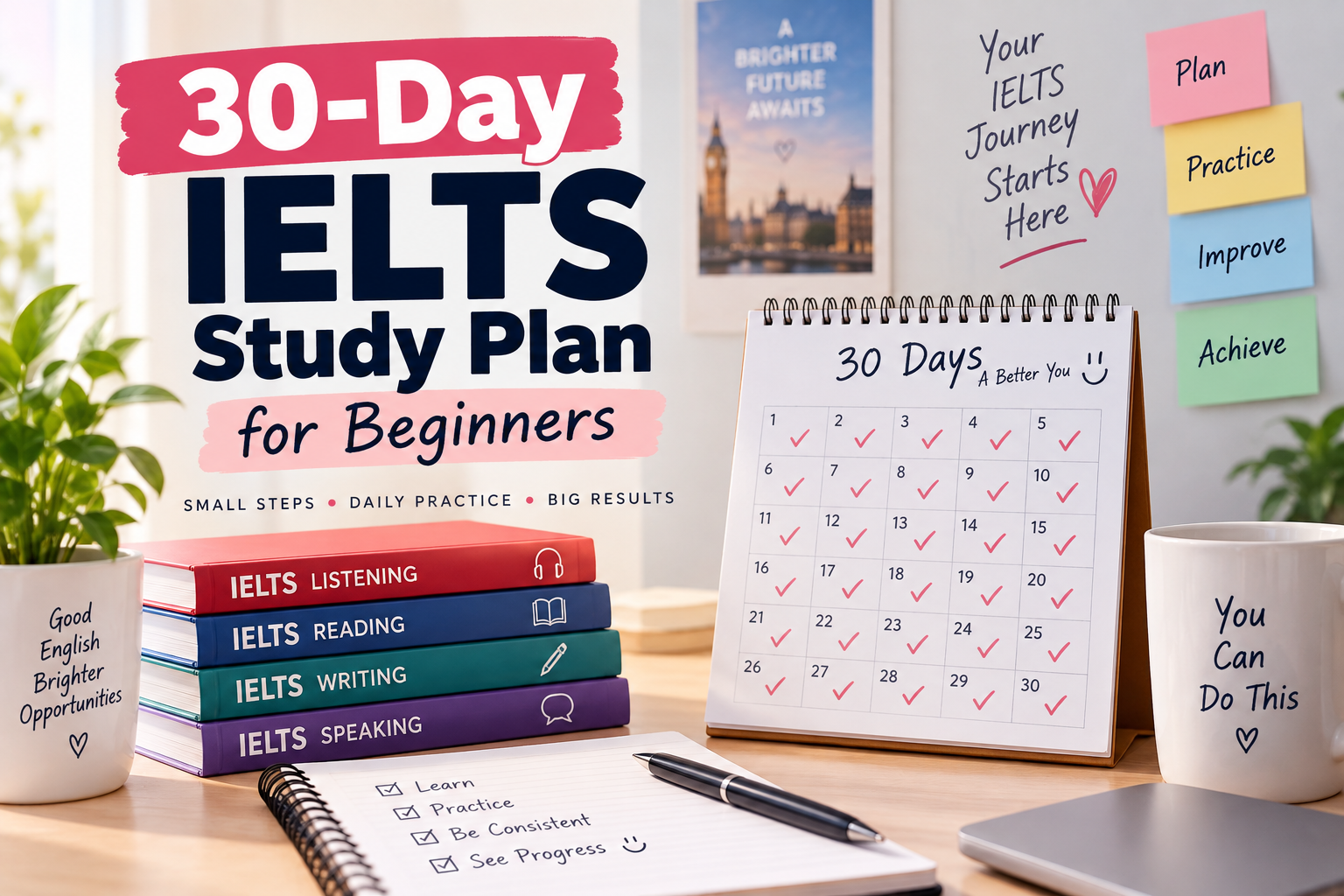
Step 3: Create a Structured IELTS Study Plan
Random practice is not the most effective way to prepare for IELTS. A structured study plan can help you build skills gradually.
A simple preparation structure could look like this:
Week 1–2: Understand the Exam
Focus on:
● IELTS test format
● Question types
● Band score expectations
● Time limits
● Common mistakes
Week 3–5: Build Core Skills
Focus on:
● Vocabulary development
● Grammar improvement
● Reading speed
● Listening accuracy
● Writing structure
● Speaking fluency
Week 6–8: Intensive Practice
Focus on:
● Section-wise practice tests
● Timed exercises
● Error analysis
● Writing feedback
● Speaking practice
Final Weeks: Mock Tests and Revision
Focus on:
● Full-length mock tests
● Weak areas
● Time management
● Exam strategy
● Confidence building
Your preparation period may be shorter or longer depending on your current English level and target score.
IELTS Listening Preparation
The Listening section tests your ability to understand spoken English in different situations and accents.
You may encounter:
● Conversations
● Everyday situations
● Educational discussions
● Academic talks or lectures
Common IELTS Listening Challenges
Many students lose marks because of:
● Spelling mistakes
● Missing important keywords
● Confusion with numbers and dates
● Difficulty understanding accents
● Losing concentration
● Writing more words than allowed
● Falling behind while listening
IELTS Listening Preparation Tips
1. Read the Questions Before Listening
Use the available time to understand:
● What information you need
● Whether the answer is a number, name, date, or word
● The expected word limit
This helps you listen with a clear purpose.
2. Improve Your Listening Exposure
Listen to English regularly through:
● Podcasts
● Interviews
● Educational videos
● News programmes
● Lectures
Try to expose yourself to different English accents.
3. Focus on Synonyms
The exact words used in the question may not always appear in the audio.
For example:
Question: What is the student's reason for changing accommodation?
Audio: The student may say they are moving because the current place is too expensive.
Understanding synonyms and paraphrasing is essential.
4. Check Spelling Carefully
Even if you understand the correct answer, an incorrect spelling can cost marks.
Practice common areas such as:
● Names
● Addresses
● Numbers
● Dates
● Academic vocabulary
IELTS Reading Preparation
The IELTS Academic Reading section requires students to read passages and answer different types of questions within a limited time.
Common question types may include:
● Multiple choice
● Matching headings
● True/False/Not Given
● Yes/No/Not Given
● Sentence completion
● Summary completion
● Matching information
How to Improve IELTS Reading
1. Develop Skimming Skills
Skimming means reading quickly to understand the general idea of a passage.
Focus on:
● Titles
● Headings
● First sentences
● Keywords
● Main ideas
2. Develop Scanning Skills
Scanning means looking quickly for specific information.
Practice finding:
● Names
● Dates
● Numbers
● Locations
● Keywords
3. Do Not Read Every Word Slowly
One of the biggest mistakes students make is trying to understand every word.
Instead:
1. Read the question.
2. Identify keywords.
3. Find the relevant part of the passage.
4. Read that section carefully.
5. Select the answer.
4. Improve Academic Vocabulary
Build vocabulary around topics commonly found in academic texts, such as:
● Education
● Environment
● Science
● Technology
● Health
● Society
● Business
● History
However, avoid simply memorising long lists of words. Learn vocabulary through context and understand how words are used in sentences.
IELTS Writing Preparation
Writing is often one of the most challenging sections for IELTS candidates.
The IELTS Academic Writing test includes two tasks.
IELTS Writing Task 1
You may be asked to describe, summarise, or explain visual information such as:
● Graphs
● Charts
● Tables
● Maps
● Processes
A strong response should focus on:
● Key features
● Important comparisons
● Accurate data description
● Clear organisation
Avoid describing every single number. Instead, identify the most significant trends and features.
A Simple Task 1 Structure
Introduction
Paraphrase the question.
Overview
Describe the main trends or key features.
Body Paragraph 1
Present important details and comparisons.
Body Paragraph 2
Present additional key information.
IELTS Writing Task 2
Task 2 requires you to write an essay in response to a topic or argument.
Common essay types include:
● Opinion essays
● Discussion essays
● Advantages and disadvantages essays
● Problem and solution essays
● Direct question essays
A Simple Task 2 Structure
Introduction
● Introduce the topic.
● Present your position or main response.
Body Paragraph 1
● Main idea
● Explanation
● Example
Body Paragraph 2
● Main idea
● Explanation
● Example
Conclusion
● Summarise your main points.
● Restate your position clearly.
How to Improve Your IELTS Writing Score
1. Answer the Question Directly
Read the question carefully and ensure that your essay addresses every part of it.
2. Focus on Clear Ideas
Complicated vocabulary does not automatically result in a higher score.
Clear, relevant, and well-developed ideas are more important than using difficult words unnecessarily.
3. Improve Grammar Accuracy
Focus on:
● Sentence structure
● Subject-verb agreement
● Articles
● Tenses
● Prepositions
● Punctuation
4. Use Linking Words Naturally
Examples include:
● However
● Therefore
● In addition
● As a result
● For example
● On the other hand
Avoid using linking words excessively.
5. Get Feedback
Regular feedback can help identify repeated mistakes that you may not notice yourself.
IELTS Speaking Preparation
The IELTS Speaking test assesses your ability to communicate naturally and effectively in English.
The test generally includes three parts.
Part 1: Introduction and Interview
You may be asked questions about familiar topics such as:
● Hometown
● Work
● Studies
● Hobbies
● Daily routines
● Interests
Part 2: Individual Long Turn
You will receive a topic and be given time to prepare before speaking about it.
Part 3: Discussion
The examiner will ask more detailed and analytical questions related to the Part 2 topic.
How to Improve IELTS Speaking
1. Speak English Every Day
Even 15 to 30 minutes of daily speaking practice can help improve fluency.
You can:
● Speak with a study partner
● Record yourself
● Answer sample questions
● Describe your daily activities
● Discuss news or academic topics
2. Do Not Memorise Answers
Memorised answers can sound unnatural and may not help you respond effectively to unexpected questions.
Instead, develop the ability to:
● Express opinions
● Give explanations
● Provide examples
● Compare ideas
3. Focus on Fluency
Do not stop after every sentence to think about grammar.
Try to communicate naturally while maintaining reasonable accuracy.
4. Expand Your Answers
Avoid giving only one-word responses.
For example:
Question: Do you enjoy travelling?
Instead of saying:
Yes, I do.
You could say:
Yes, I really enjoy travelling because it gives me the opportunity to experience different cultures and visit new places.
Build Your IELTS Vocabulary the Right Way
Vocabulary is important across all four IELTS sections.
Instead of memorising isolated words, focus on learning:
● Synonyms
● Collocations
● Topic-specific vocabulary
● Academic expressions
● Word families
For example:
Improve
Improvement → Improved → Improving
Educate
Education → Educational → Educated
Create a vocabulary notebook with:
Word Meaning Example
Significant Important or noticeable There was a significant increase in demand.
Benefit An advantage Studying abroad offers several benefits.
Decline A decrease The number of visitors declined.
The most effective method is to use new vocabulary in your writing and speaking.
Improve Your Grammar for IELTS
You do not need to use extremely complicated grammar in every sentence.
Instead, aim for a combination of:
● Simple sentences
● Compound sentences
● Complex sentences
For example:
Simple:
Many students choose to study abroad.
Compound:
Many students choose to study abroad, and they gain international experience.
Complex:
Many students choose to study abroad because they want access to better educational opportunities.
Focus on using grammar accurately rather than forcing complicated structures.
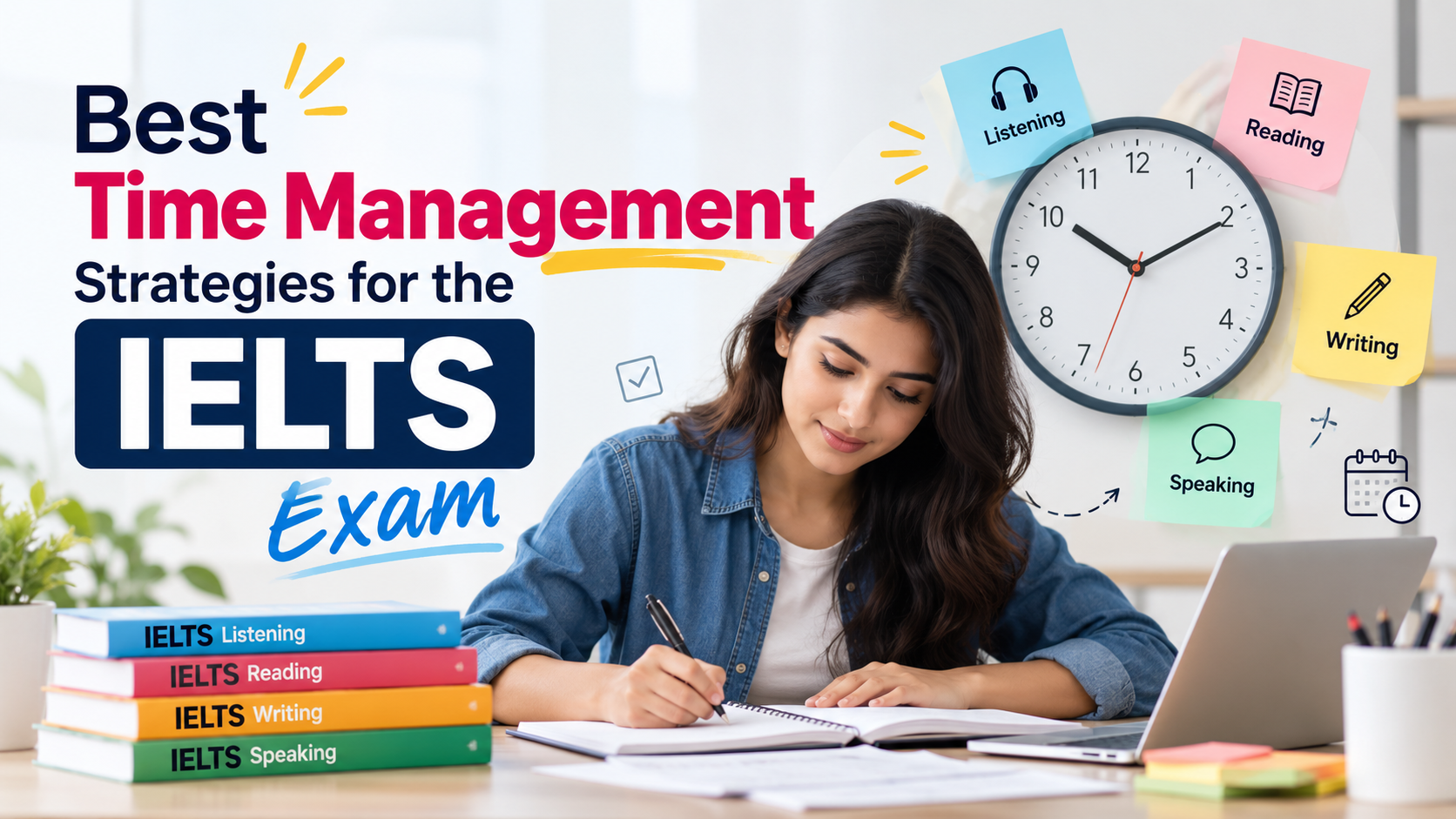
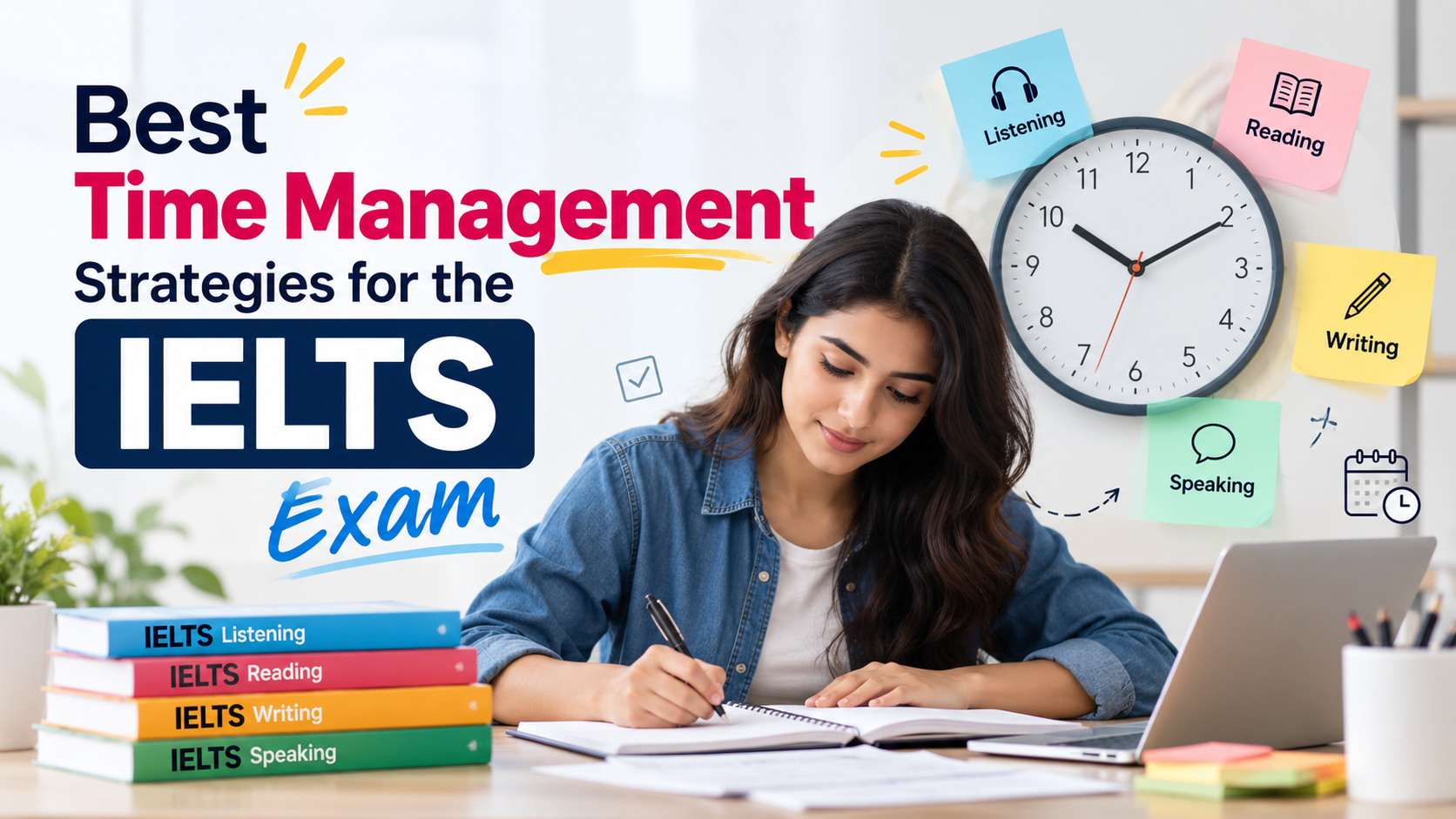
Time Management Tips for IELTS
Time management is a major factor in IELTS performance.
Listening
● Read questions carefully.
● Pay attention to instructions.
● Keep moving if you miss an answer.
● Check spelling where possible.
Reading
● Avoid spending too long on one difficult question.
● Manage your time across all passages.
● Use skimming and scanning techniques.
Writing
Plan before writing.
A useful approach is:
● Planning
● Writing
● Reviewing
Leave enough time to check:
● Grammar
● Spelling
● Word count
● Question requirements
Speaking
Focus on communication rather than perfection.
Listen carefully to the examiner and answer the actual question.
Common IELTS Preparation Mistakes to Avoid
1. Taking Practice Tests Without Analysing Mistakes
Completing many tests is not enough.
After every practice session, ask:
● Why was my answer wrong?
● Did I misunderstand the question?
● Was it a vocabulary problem?
● Was it a grammar mistake?
● Did I run out of time?
2. Memorising Essays
Memorised essays can limit your ability to respond to the actual question.
Learn structures and techniques instead of memorising complete answers.
3. Ignoring Weak Areas
Do not spend all your time practising the section you enjoy most.
Identify your weakest skill and allocate additional study time to it.
4. Using Difficult Vocabulary Incorrectly
Using advanced words incorrectly can reduce clarity.
Choose vocabulary that you understand and can use accurately.
5. Not Practising Under Timed Conditions
IELTS is a timed examination.
As your exam approaches, complete practice tests under realistic conditions.
A Daily IELTS Study Routine
Here is an example of a 2-hour daily study routine.
First 30 Minutes: Vocabulary and Grammar
Focus on:
● New vocabulary
● Grammar exercises
● Sentence construction
Next 30 Minutes: Listening or Reading
Alternate between:
● Listening practice
● Reading practice
Next 30 Minutes: Writing
Practise:
● Task 1
● Task 2
● Planning essays
● Improving old answers
Final 30 Minutes: Speaking
Practise:
● Sample questions
● Fluency exercises
● Topic discussions
● Recording your answers
Adjust the routine according to your weakest areas.
One-Week IELTS Preparation Schedule
Day Main Focus
Monday Listening + Vocabulary
Tuesday Reading + Grammar
Wednesday Writing Task 1 + Speaking
Thursday Listening + Reading
Friday Writing Task 2 + Vocabulary
Saturday Full or Partial Mock Test
Sunday Review Mistakes + Weak Areas
The key is consistency. Regular practice is generally more effective than studying intensively only once or twice a week.
How Many Months Do You Need to Prepare for IELTS?
The required preparation time depends on:
● Your current English level
● Your target band score
● Your previous IELTS experience
● Your daily study time
● Your weakest skills
A student who already has strong English skills may require less preparation time than someone who needs to significantly improve their language ability.
Start with a diagnostic test, identify the gap between your current level and your target, and create a realistic study schedule.
Final Week Before the IELTS Exam
During the final week, avoid overwhelming yourself with too much new information.
Focus on:
● Reviewing common mistakes
● Completing timed practice
● Revising vocabulary
● Reviewing writing structures
● Practising speaking
● Maintaining a healthy routine
Try to avoid spending the entire final night studying.
Good rest and a calm mindset can help you perform more effectively.
IELTS Preparation Checklist
● Understand the IELTS Academic test format
● Check the score required by your chosen university
● Take a diagnostic test
● Identify your weakest section
● Create a realistic study schedule
● Practise Listening regularly
● Improve Reading speed and comprehension
● Learn Writing Task 1 and Task 2 structures
● Improve grammar and vocabulary
● Practise speaking regularly
● Complete timed practice tests
● Analyse every mistake
● Get feedback on your writing and speaking
● Review your progress regularly
● Prepare calmly for test day
How IELTS Preparation Supports Your Study Abroad Journey
IELTS preparation is not only about achieving a required band score. The skills you develop while preparing can also support your future academic journey.
Strong English skills can help you:
● Understand university lectures
● Participate in classroom discussions
● Write academic assignments
● Communicate with professors
● Work on group projects
● Build international friendships
● Adapt to life in a new country
For this reason, effective IELTS preparation should focus on improving your real English communication skills rather than simply memorising test answers.
Preparing for IELTS requires a combination of English language development, exam strategy, regular practice, and effective time management.
Start by understanding the exam format and identifying your target score. Take a diagnostic test to discover your strengths and weaknesses, then create a structured study plan that includes Listening, Reading, Writing, and Speaking practice.
Most importantly, analyse your mistakes and work consistently on improving them.
For study abroad aspirants, a strong IELTS score can be an important step towards university admission and international education opportunities. With the right preparation strategy, regular practice, and expert guidance, you can approach the IELTS exam with greater confidence and move closer to achieving your study abroad goals.
Start your IELTS preparation early, practise consistently, and make every step of your preparation part of your journey towards studying abroad.